TL;DR:
- Mobile optimization and page speed are critical for higher search rankings and user experience.
- Outdated keyword tactics and thin content harm SEO; focus on valuable, customer-focused content.
- Regular SEO audits and fixing advanced issues like hreflang tags and link equity boost long-term visibility.
You invest time, money, and energy into SEO, but your website barely moves in search results. Sound familiar? Many small and medium-sized business owners across South Africa face exactly this frustration, often without realising that a handful of avoidable mistakes are quietly draining their budgets and blocking their growth. The good news is that once you know what these mistakes look like, fixing them is far more straightforward than most people expect. This guide walks you through the most damaging SEO errors, explains why they happen, and gives you practical solutions built for South African businesses operating in the real world.
Table of Contents
- Mistake 1: Ignoring mobile optimization and page speed
- Mistake 2: Outdated keyword strategies and thin content
- Mistake 3: Neglecting regular SEO audits and technical hygiene
- Mistake 4: Overlooking advanced issues — internationalization and link equity
- Why most SEO advice misses the real point for South African SMBs
- Let local experts help you avoid costly SEO mistakes
- Frequently asked questions
Key Takeaways
| Point | Details |
|---|---|
| Prioritize mobile speed | Fast, mobile-optimized sites retain visitors and secure higher search rankings. |
| Focus on updated content | Modern, high-quality content matching user intent outperforms outdated keyword tactics. |
| Do regular SEO audits | Routine technical and content checks help catch errors before they impact visibility. |
| Mind advanced technicals | Fixing issues like hreflang tags and internal links protects authority for long-term growth. |
Mistake 1: Ignoring mobile optimization and page speed
Almost every SME website we encounter has at least one speed or mobile issue holding it back. Google switched to mobile-first indexing years ago, which means it crawls and ranks your mobile site, not your desktop version. If your mobile experience is clunky, slow, or broken, your rankings suffer regardless of how polished your desktop site looks.
Speed is not just a technical nicety. Page experience counts for 28% of ranking weight, and sites that take over 3 seconds to load lose the majority of their visitors before a single word is read. Think about that: you could have the best content in your industry, but if your page loads slowly, most people never see it.
How does design impacts SEO play into this? Heavily designed pages with large uncompressed images, bloated JavaScript, and outdated themes are among the biggest culprits. The most common mobile mistakes we see include:
- Uncompressed images that add unnecessary load time
- Non-responsive layouts that break on smaller screens
- Excessive plugins or scripts that slow page rendering
- No caching set up on the server side
- Failing to test the site on actual mobile devices
The fix is more accessible than most business owners think. Start by running your site through Google PageSpeed Insights. Compress your images using tools like TinyPNG. Remove plugins you do not use. Consider switching to a lightweight, responsive theme if your current one is dragging performance down.
Pro Tip: A site that loads in under 1 second can rank over 7 positions higher than a slower competitor in the same niche. Prioritising speed is one of the highest-return investments you can make in SEO. Pair this with solid technical SEO best practices and you create a strong foundation that everything else builds on.
Speed and mobile optimization are not optional extras. They are the baseline. Get this wrong and every other SEO effort you make is working against a headwind.
Mistake 2: Outdated keyword strategies and thin content
Many business owners learned SEO at a time when stuffing a keyword into a page as many times as possible was enough to rank. That era is long gone. Google’s algorithms have evolved significantly, and shifting to semantic intent and content quality now drives far greater ranking success than any keyword density trick.
Modern SEO evaluates your content through the lens of E-E-A-T, which stands for Experience, Expertise, Authoritativeness, and Trustworthiness. Google wants to surface content that genuinely helps people. If your pages are thin, repetitive, or stuffed with filler, they are likely being ignored or actively suppressed in search results.
Outdated tactics that hurt you today include:
- Keyword stuffing: repeating the same phrase unnaturally throughout a page
- Content spinning: rewriting existing articles without adding real value
- Publishing dozens of near-identical pages targeting slight keyword variations
- Buying content in bulk with no editorial oversight or subject matter expertise
“The businesses that win in search are those that treat their content as a genuine resource for their customers, not a vehicle for keywords.”
The modern approach requires you to think about what your customer actually needs to know. A plumber in Johannesburg does not just need a page that says “plumber Johannesburg” twenty times. They need a page that answers real questions: What does a call-out fee include? How quickly can you respond? What areas do you cover?
Content audits are essential here. Go through your existing pages and ask: does this page genuinely help someone? If not, update it, merge it with a stronger page, or remove it. Keeping up with SEO trend updates helps you stay ahead of algorithm changes before they affect your rankings.
Think of your content as a conversation with your best potential customer. Every page should leave them better informed and more confident in choosing you.
Mistake 3: Neglecting regular SEO audits and technical hygiene
Your site is not a static object. It changes constantly: pages get added, plugins update, links break, and search engine requirements shift. Without regular audits, small technical problems compound into serious ranking losses over time.
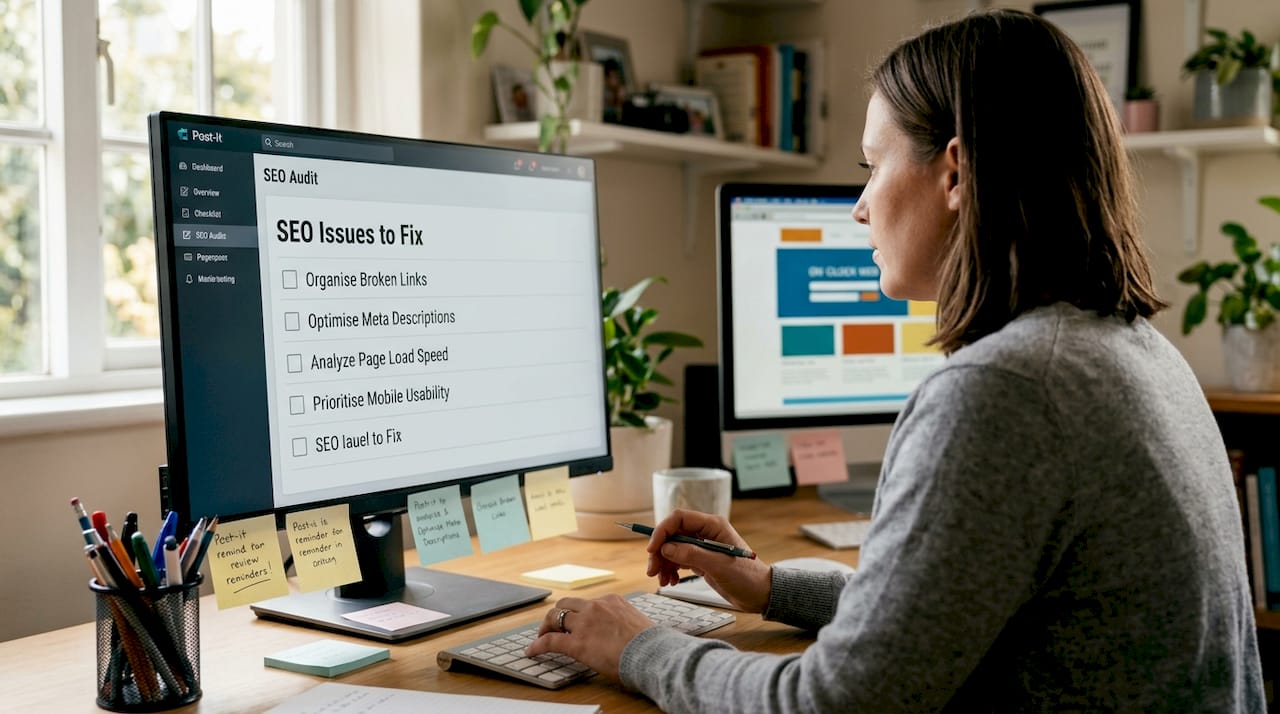
An SEO audit checklist helps you systematically catch issues that are invisible during normal browsing but damaging in search. Fresh content and regular audits are essential to maintain visibility as SEO signals keep evolving.
Here is a structured approach to running a quarterly audit:
- Check for crawl errors in Google Search Console
- Identify and fix broken internal and external links
- Review and update meta titles and descriptions
- Check for duplicate content across pages
- Verify that your sitemap is current and submitted
- Test page speed on both mobile and desktop
- Confirm that structured data markup is valid
| Audit area | Common issue | Impact if ignored |
|---|---|---|
| Crawl errors | Pages not indexed | Lost visibility |
| Broken links | 404 errors | Poor user experience |
| Duplicate content | Competing pages | Diluted rankings |
| Missing meta tags | No snippet in search | Lower click-through rate |
| Slow page speed | High bounce rate | Ranking drops |
Pro Tip: Set a recurring calendar reminder every three months for your SEO audit. Pair it with reviewing your Google Analytics data so you can connect technical fixes to real traffic changes. Learning more about improving performance with audits gives you a clearer picture of what to prioritise each cycle.
The businesses that maintain consistent rankings are rarely the ones with the flashiest strategies. They are the ones who do the boring, disciplined work of keeping their sites clean and healthy.
Mistake 4: Overlooking advanced issues — internationalization and link equity
Once you have the basics covered, there are more subtle technical mistakes that can quietly undermine your SEO. Two of the most overlooked are hreflang errors and poor internal link management.
Hreflang tags tell Google which version of your content to show to users in different regions or languages. If you run a business that serves multiple provinces or language groups in South Africa, incorrect hreflang implementation causes page cannibalization. This means Google gets confused about which page to rank, and the wrong page ends up showing in search results. Hreflang errors and poorly managed internal links can undermine SEO for multi-region businesses in ways that are hard to diagnose without expert help.
“Getting hreflang right is not about being technically perfect. It is about making sure the right customer lands on the right page.”
Link equity is equally misunderstood. Every page on your site has a certain amount of authority, and that authority flows through your internal links. When you add a nofollow tag to internal links, you block that authority from passing through. Many business owners do this accidentally when using certain plugins or page builders.
Common symptoms of these advanced problems include:
- The wrong page appearing in search results for a target keyword
- Poor performance in specific regions despite good overall rankings
- Flat domain authority even with consistent backlink building
- Key pages not ranking despite strong content
Understanding canonicalization best practices is closely tied to these issues. Canonical tags and hreflang work together to signal to Google which pages are authoritative. Get them wrong and you create confusion that costs you rankings. Reviewing real-world SEO case studies from businesses in similar situations can show you exactly how these issues play out and how they were resolved.
Why most SEO advice misses the real point for South African SMBs
Most SEO guides are written for large international businesses with big teams, unlimited content budgets, and the ability to build thousands of backlinks. That reality does not apply to most South African SMEs, and following advice built for those conditions can actually steer you in the wrong direction.
The South African digital landscape has its own constraints. Connectivity costs affect how users browse. Local competition patterns differ from global markets. Budget limitations mean you cannot afford to chase every Google update or implement every tactic simultaneously. Tracking marketing ROI metrics that actually matter to your business is more valuable than obsessing over algorithm news.
What genuinely works here is a focused approach: get your technical foundation solid, produce content that answers real questions from your actual customers, and run regular audits to catch problems early. These fundamentals deliver compounding returns over time. The latest SEO hack rarely matters if you have these three things in place. Real wins come from consistency and specificity, not from chasing trends.
Let local experts help you avoid costly SEO mistakes
Knowing what mistakes to avoid is a strong start, but fixing them correctly and consistently is where most business owners run out of time or expertise.
Working with a team that understands the South African market means you get a strategy built around your specific goals, budget, and competitive landscape, not a generic checklist copied from an overseas blog. Our SEO optimization service covers everything from technical audits to content strategy, giving you a clear picture of what needs fixing and what will move the needle fastest. If budget is a concern, explore our affordable SEO options designed specifically for growing South African businesses. Ready to stop guessing and start ranking? Speak to an SEO expert and get a tailored plan that fits your business.
Frequently asked questions
How often should I run an SEO audit?
You should audit your website at least quarterly to catch and fix technical issues before they erode your rankings. Quarterly audits for SMBs are the recommended minimum to stay on top of changing SEO signals.
Is mobile optimization still important for SEO in 2026?
Absolutely. Google uses mobile-first indexing, meaning your mobile site is what determines your rankings. Mobile-first indexing and speed remain among the most heavily weighted ranking factors in 2026.
What is link equity and why does it matter?
Link equity is the authority that flows through your site via internal and external links. Nofollow internal links waste equity and prevent authority from reaching your most important pages, which weakens your overall rankings.
Recommended
- Local SEO for Small Businesses: Common Mistakes to Avoid – LSA SEO Agency
- Avoid SEO Pitfalls with Smart Canonicalization in SEO – LSA SEO Agency
- Don’t Miss Out: Key Agency SEO Trends for Business Owners – LSA SEO Agency
- 5xx Server Errors Prevention: Save Time and Boost Sales – LSA SEO Agency
- Debunking SEO myths: boost your business in 2026 – seo analytic
- Mobile SEO Best Practices: Optimizing for a Mobile-First World!
source https://localseoagency.co.za/avoid-common-seo-mistakes-boost-your-business/



No comments:
Post a Comment