Most South African business owners focus on backlinks and keywords while overlooking a powerful ranking factor hiding in plain sight: customer reviews. Reviews account for 15-20% of local pack rankings, yet many businesses have fewer than 10. This guide reveals how to leverage reviews strategically to dominate local search results, attract more customers, and outrank competitors in your market. You’ll discover proven benchmarks, collection strategies, and expert tactics that transform reviews into a sustainable SEO advantage.
Table of Contents
- How Customer Reviews Affect Local SEO Rankings
- Benchmarking Review Volumes And Their Business Impact
- Strategies To Collect And Manage Customer Reviews Effectively
- Common Pitfalls And Pro Tips For Maximizing Review SEO Benefits
- Boost Your Local SEO With Expert Support From LSA SEO Agency
- Frequently Asked Questions
Key takeaways
| Point | Details |
|---|---|
| Reviews drive rankings | Customer reviews contribute 15-20% to local search pack positions, making them a top ranking factor |
| Volume matters competitively | Aim for 50-100+ reviews in competitive South African markets to stand out and build authority |
| Text boosts relevance | Review content and owner responses add keyword-rich signals that improve topical relevance |
| Stars increase clicks | Higher star ratings displayed in search results can boost click-through rates significantly |
| Active management builds trust | Responding professionally to all reviews improves consumer confidence and conversion rates |
How customer reviews affect local SEO rankings
Google’s local search algorithm evaluates three core factors: relevance, distance, and prominence. Customer reviews directly influence prominence, which measures how well-known and trustworthy your business appears online. Review signals rank ahead of traditional on-page SEO in importance for local pack placement, making them essential for visibility.
The review ecosystem works through multiple mechanisms. First, review quantity signals popularity and activity to search engines. A business with 80 reviews appears more established than one with 8. Second, review text provides authentic, user-generated content rich in local search ranking factors like location mentions and service descriptions. Third, star ratings create visual trust signals that influence click decisions before users even visit your site.
Owner responses add another layer of SEO value by generating fresh content on your Google Business Profile. When you respond thoughtfully to reviews, you create opportunities to naturally incorporate relevant keywords and demonstrate customer care. This activity signals to Google that your profile is actively managed and deserves higher visibility.
Pro Tip: Focus on review recency as well as quantity. Google favors businesses with recent review activity, so aim for a steady stream of new reviews rather than a one-time push.
Consumer behavior amplifies the SEO impact. 98% of consumers read online reviews before choosing local businesses, according to BrightLocal’s 2025 data. This means reviews influence both your ranking position and whether users click through when they find you. The combination creates a powerful multiplier effect for local SEO insights success.
“Review signals have overtaken traditional link building and on-page optimization as the primary driver of local search visibility. Businesses ignoring this shift are leaving money on the table.” – Local SEO Research Findings
The prominence factor extends beyond Google. Reviews on Facebook, industry directories, and local platforms create a web of trust signals that reinforce your authority. Search engines aggregate these signals to form a comprehensive view of your reputation, making multi-platform review presence increasingly important in 2026.
Benchmarking review volumes and their business impact
Understanding competitive benchmarks helps you set realistic targets. In major South African metros like Johannesburg, Cape Town, and Durban, businesses in competitive categories need 50-100+ reviews to achieve strong local pack visibility. Less competitive markets or smaller towns may require fewer, but 10 reviews represents the minimum threshold for building basic consumer trust.
The revenue impact of reviews is measurable and significant. Harvard Business School research found that a one-star rating increase can boost revenue by 5-9%. For a business generating R500,000 monthly, that translates to R25,000-R45,000 in additional income. Spiegel Research Center discovered that displaying reviews can increase conversion rates by up to 270%, turning browsers into buyers more effectively.
| Review Count | Trust Level | Typical Impact |
|---|---|---|
| 0-5 reviews | Minimal credibility | Most consumers skip to competitors |
| 10-25 reviews | Basic trust established | Sufficient for low-competition markets |
| 50-100 reviews | Strong authority | Competitive in metro markets |
| 100+ reviews | Market leader status | Dominates local pack, premium pricing power |
Real-world examples illustrate these principles. A Pretoria-based party hire company grew from 12 reviews to 105 over 18 months by implementing systematic post-service review requests. Their local pack ranking jumped from position 7 to position 2, and booking inquiries increased 340%. The business owner reported that new customers frequently mentioned the high review count as a deciding factor.
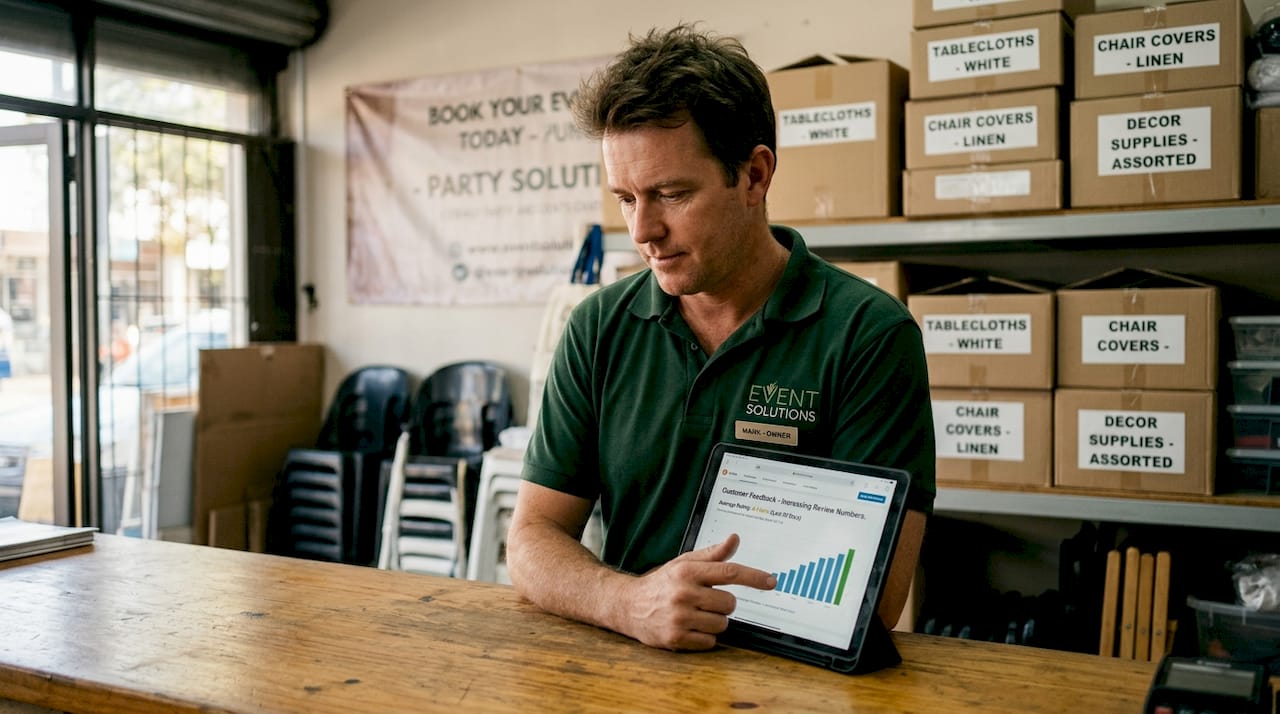
Star rating distribution matters as much as total count. A business with 60 reviews averaging 4.8 stars typically outperforms one with 80 reviews averaging 4.2 stars. Quality and quantity work together, making it essential to deliver excellent service alongside your review collection efforts.
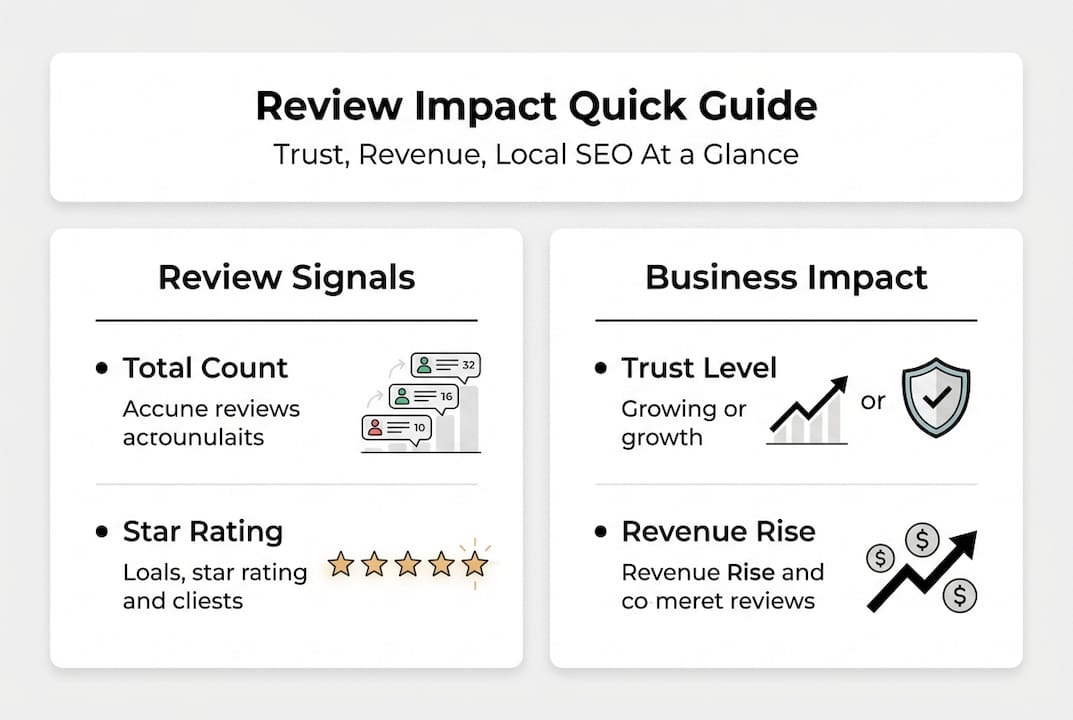
Pro Tip: Monitor your review velocity (reviews per month) compared to competitors. If rivals gain 5 reviews monthly while you gain 2, they’ll eventually overtake you regardless of your current advantage.
For local SEO services targeting specific neighborhoods, geographic distribution of reviews adds another dimension. Reviews mentioning specific areas or landmarks strengthen relevance for location-based searches, helping you appear for “near me” queries from those zones.
Strategies to collect and manage customer reviews effectively
Successful review collection starts with timing and convenience. Ask customers for reviews immediately after positive experiences when satisfaction is highest. This might be post-purchase, after service completion, or following a support interaction that resolved an issue well. The longer you wait, the lower your response rate drops.
Implement these proven collection methods:
- Send personalized follow-up messages via email or SMS with direct review links
- Train staff to verbally request reviews during positive customer interactions
- Display QR codes linking to your Google Business Profile at checkout or service completion
- Include review requests in transaction confirmation emails with one-click access
- Create a simple landing page that offers multiple review platform options
Platform diversity strengthens your overall presence. While Google Business Profile should be your primary focus for local SEO, also encourage reviews on Facebook, industry-specific directories, and local South African platforms. This creates multiple trust signals and captures customers who prefer different platforms.
Review responses add fresh content and demonstrate engagement. Respond to every review within 24-48 hours when possible. For positive reviews, thank customers specifically and mention details from their feedback. For negative reviews, acknowledge concerns professionally, apologize when appropriate, and offer to resolve issues offline.
Incorporate relevant keywords naturally in your responses without keyword stuffing. If a customer praises your “emergency plumbing service in Sandton,” your response might reference “providing reliable emergency plumbing throughout Sandton.” This adds keyword relevance while maintaining authentic communication.
Pro Tip: Create response templates for common review types, but always personalize them with specific details. Generic copy-paste responses can appear insincere and waste the SEO opportunity.
Showcase your best reviews on your website and social media profiles. Feature them on service pages, create testimonial sections, and share positive feedback as social proof. This amplifies review impact beyond search rankings by building trust throughout your marketing funnel. Integrate reviews into your local SEO strategy as a core pillar rather than an afterthought.
Maintain review authenticity by never buying fake reviews or offering incentives that violate platform guidelines. Google can detect unnatural patterns and may penalize your profile. Focus instead on making it genuinely easy for satisfied customers to share their experiences through local SEO optimization best practices.
Common pitfalls and pro tips for maximizing review SEO benefits
Fake or incentivized reviews represent the biggest risk to your review strategy. Google’s algorithms detect suspicious patterns like review bursts from new accounts, generic text, or reviews from IP addresses unconnected to your business location. Penalties can include review removal, profile suspension, or ranking drops that take months to recover from.
Ignoring negative reviews damages your credibility more than the reviews themselves. 98% of consumers read reviews, and they expect to see some criticism. Businesses with only perfect 5-star reviews often appear fake. A 4.7-4.9 average with thoughtful responses to criticism builds more trust than a suspicious 5.0.
Avoid these common mistakes:
- Asking for reviews only from happy customers, creating selection bias
- Copying identical response text across multiple reviews
- Waiting weeks to respond, signaling poor customer service
- Getting defensive or argumentative with negative reviewers
- Neglecting reviews on platforms beyond Google
- Failing to track review metrics and competitor activity
Review spam and duplication across platforms can trigger filters. If the same customer posts identical reviews on Google, Facebook, and three directories simultaneously, algorithms may flag them as suspicious. Encourage authentic, platform-specific feedback instead.
Pro Tip: Regularly A/B test your review request methods. Try different message timing, wording, and channels to discover what generates the highest response rates for your specific customer base.
Monitor competitor review activity for strategic insights. If a competitor suddenly gains 20 reviews in a month, investigate their tactics. They might have launched a new post-purchase email sequence or trained staff on verbal requests. Adapt successful approaches while maintaining authenticity and following South African SEO tips for local market nuances.
| Strategy | Risk Level | SEO Impact | Trust Impact |
|---|---|---|---|
| Organic customer requests | None | High, sustainable | Very high |
| Incentivized reviews | High penalty risk | Negative if caught | Damages credibility |
| Selective asking | Medium | Moderate | Creates suspicion |
| Multi-platform presence | None | Very high | Builds authority |
Response quality matters as much as speed. A thoughtful, personalized response to a negative review can convert critics into advocates and demonstrate your commitment to improvement. Future customers reading the exchange often focus more on how you handled criticism than the complaint itself.
Showcase your response time as a trust signal. If you consistently respond within hours, mention this in your marketing. Fast, professional engagement differentiates you from competitors who ignore their review profiles. This active management signals to both customers and search engines that your business prioritizes reputation and customer satisfaction.
Boost your local SEO with expert support from LSA SEO Agency
Leveraging customer reviews for maximum SEO impact requires strategy, consistency, and technical expertise. While the principles are straightforward, implementation demands ongoing attention that many business owners struggle to maintain alongside daily operations.
LSA SEO Agency specializes in helping South African businesses transform their review profiles into powerful ranking assets. Our local SEO services that drive results include review strategy development, response management, and integration with broader optimization efforts. We handle the technical details while you focus on delivering the excellent service that generates positive reviews naturally.
Our team understands the unique dynamics of South African markets, from competitive Johannesburg sectors to emerging opportunities in smaller cities. We combine review optimization with comprehensive best SEO optimization service approaches that address technical factors, content strategy, and local signals holistically. This integrated method delivers sustainable visibility improvements that compound over time.
Explore our SEO packages south Africa designed specifically for local businesses ready to dominate their markets. Whether you’re starting with few reviews or looking to scale an existing advantage, we provide the expertise and systems to accelerate your progress while avoiding costly mistakes.
Frequently asked questions
What is the minimum number of reviews my South African business should aim for?
Aim for at least 10 reviews to establish basic consumer trust and credibility. In competitive metro markets like Johannesburg, Cape Town, or Durban, target 50-100+ reviews to compete effectively for top local pack positions. Less competitive categories or smaller towns may achieve strong visibility with 25-50 reviews.
How do customer reviews improve my Google search ranking?
Reviews contribute 15-20% to local pack rankings through multiple mechanisms. They add keyword-rich, authentic content that boosts topical relevance for your business category and location. Google uses review quantity, recency, and ratings to assess prominence and trustworthiness. High star ratings also increase click-through rates from search results, creating a positive engagement signal.
What are the best practices for responding to negative reviews?
Respond within 24-48 hours with a professional, empathetic tone that acknowledges the customer’s concerns. Avoid defensive or dismissive language, and offer to resolve issues through direct communication offline when appropriate. Thank reviewers for feedback and explain any corrective actions you’re taking. Future customers judge you more on how you handle criticism than on the complaint itself.
Can I remove negative reviews from my Google Business Profile?
You can flag reviews that violate Google’s policies, such as spam, fake reviews, off-topic content, or illegal content. However, you cannot remove legitimate negative reviews simply because they’re unfavorable. Focus instead on responding professionally and generating more positive reviews to improve your overall rating. A few negative reviews among many positive ones actually builds credibility.
How often should I ask customers for reviews?
Request reviews after every positive customer interaction or completed transaction. Timing matters more than frequency; ask immediately when satisfaction is highest. For repeat customers, space requests appropriately based on purchase cycles. Monthly service clients might be asked quarterly, while one-time purchasers should receive a request within days of their experience.
Recommended
- Get Ahead: Must-Try Local SEO Strategies for Your Business – LSA SEO Agency
- User Experience for SEO – Impacts on Local Visibility
- Honest SEO Agency Reviews to Help You Make Smart Choices – LSA SEO Agency
- Local SEO Challenges – Why Visibility Matters
- Posizionamento sito web e SEO – Andrea Freelance
source https://localseoagency.co.za/use-customer-reviews-for-seo-boost-local-visibility/



No comments:
Post a Comment