When a hungry customer in Johannesburg searches Google for “braai spot near me,” the last thing you want is your restaurant to stay hidden. In South Africa’s competitive dining market, being found online can mean the difference between a packed dining room and empty tables. Mastering local SEO for restaurants makes it easy for customers to discover your business right when they are ready to eat, and this guide will clarify how you can stand out where it matters most.
Table of Contents
- SEO For Local Restaurants Explained Clearly
- Google My Business For Restaurants
- Optimising On-Page And Local Citations
- Building Quality Local Backlinks Ethically
- Common SEO Mistakes South African Restaurants Make
Key Takeaways
| Point | Details |
|---|---|
| Optimise Google My Business | Claim and complete your GMB profile to enhance visibility and manage customer engagement effectively. |
| Consistent NAP Information | Ensure your Name, Address, and Phone number are consistent across all listings to improve search engine trust and minimise customer confusion. |
| Focus on Local Keywords | Use relevant local keywords throughout your website to attract specific searches and increase visibility in local search results. |
| Engage with Online Reviews | Actively respond to customer reviews to enhance reputation and demonstrate commitment to customer satisfaction, positively impacting your online visibility. |
SEO for local restaurants explained clearly
SEO for local restaurants means making sure people in your area can find your business when they search Google for food options. It’s not complicated, but it does require understanding how search engines work and what your potential customers are actually looking for. When someone in Johannesburg types “best pizza near me” or “Italian restaurant in Sandton,” you want your restaurant to appear in those results. That’s what local SEO does.
At its core, local SEO involves optimising website content and your online presence so search engines can easily discover and rank your restaurant when customers search nearby. This means having accurate business information across Google My Business, consistent NAP data (Name, Address, Phone number) on your website and directory listings, and content that speaks to what locals in your area are searching for. Your website needs to load quickly, work smoothly on mobile phones, and contain keywords that reflect how people actually search for restaurants. If you’re running a steakhouse in Cape Town, you need pages optimised for searches like “premium steaks in the Waterfront” or “fine dining near me,” not just generic steak restaurant content.
Local SEO also involves building credibility through online reviews and ratings. When customers leave positive reviews on Google, TripAdvisor, or Facebook, those signals tell search engines that your restaurant is trustworthy and relevant. Citations in local directories matter too. The more reputable places that mention your restaurant name, address, and phone number, the stronger your local SEO foundation becomes. Additionally, connecting your restaurant’s story and local authenticity to your marketing strengthens your appeal. Research shows that leveraging regional gastronomy enhances destination allure and customer connection, which directly boosts how search engines perceive your relevance to local searches.
The practical reality is this: local SEO works because it removes friction between hungry people and your restaurant. Instead of potential customers driving past your restaurant while searching online, they find you first. Your website becomes visible in map results, local pack listings show your hours and location, and people can book tables or call directly from search results. Without local SEO, you’re competing mainly on word of mouth and paid advertising. With it, you’re capturing customers at the exact moment they’re ready to eat. Most restaurant owners worry that SEO is too technical or takes years to work, but when done correctly, you can see real results within 3 to 6 months.
Below is a comparison of core local SEO elements for South African restaurants:
| SEO Element | Main Purpose | Typical Business Impact |
|---|---|---|
| Google My Business | Visibility on Google Maps & Search | Increased foot traffic and calls |
| Local Citations | Name/Address/Phone consistency across platforms | Improved Google trust and ranking |
| Online Reviews | Building reputation through customer feedback | Higher ranking and more bookings |
| On-Page Optimisation | Targeting location-specific keywords on website | More local search impressions |
| Quality Backlinks | Earning links from authoritative local websites | Long-term authority and customers |
Dica profissional Start by claiming and fully completing your Google My Business profile today, adding high quality photos of your dishes and dining space, then focus on getting reviews from happy customers, as these are the two fastest ways to improve your local visibility without technical expertise.
Google My Business for restaurants
Google My Business is your digital storefront on Google Search and Maps. If you haven’t claimed your GMB listing yet, you’re essentially invisible to customers searching for restaurants in your area. When someone searches for “restaurants near me” or “Italian food in Pretoria,” Google pulls information directly from GMB profiles to show those results. Without an optimised GMB listing, potential customers might not even know your restaurant exists, or worse, they’ll see incorrect hours and think you’re closed when you’re actually serving customers.
Google My Business allows restaurants to manage online presence across Google Search and Maps by updating business information, managing customer reviews, posting special offers and menu updates, and directly engaging with potential diners. When you claim and optimise your GMB profile properly, you dramatically improve your visibility in local search results. The profile includes your restaurant’s name, address, phone number, hours of operation, website link, photos, menu links, and customer reviews. Think of it as a mini website that appears instantly when someone searches for your type of restaurant in your neighbourhood. The more complete your profile, the higher you rank in local search results and the more likely customers will call or visit.
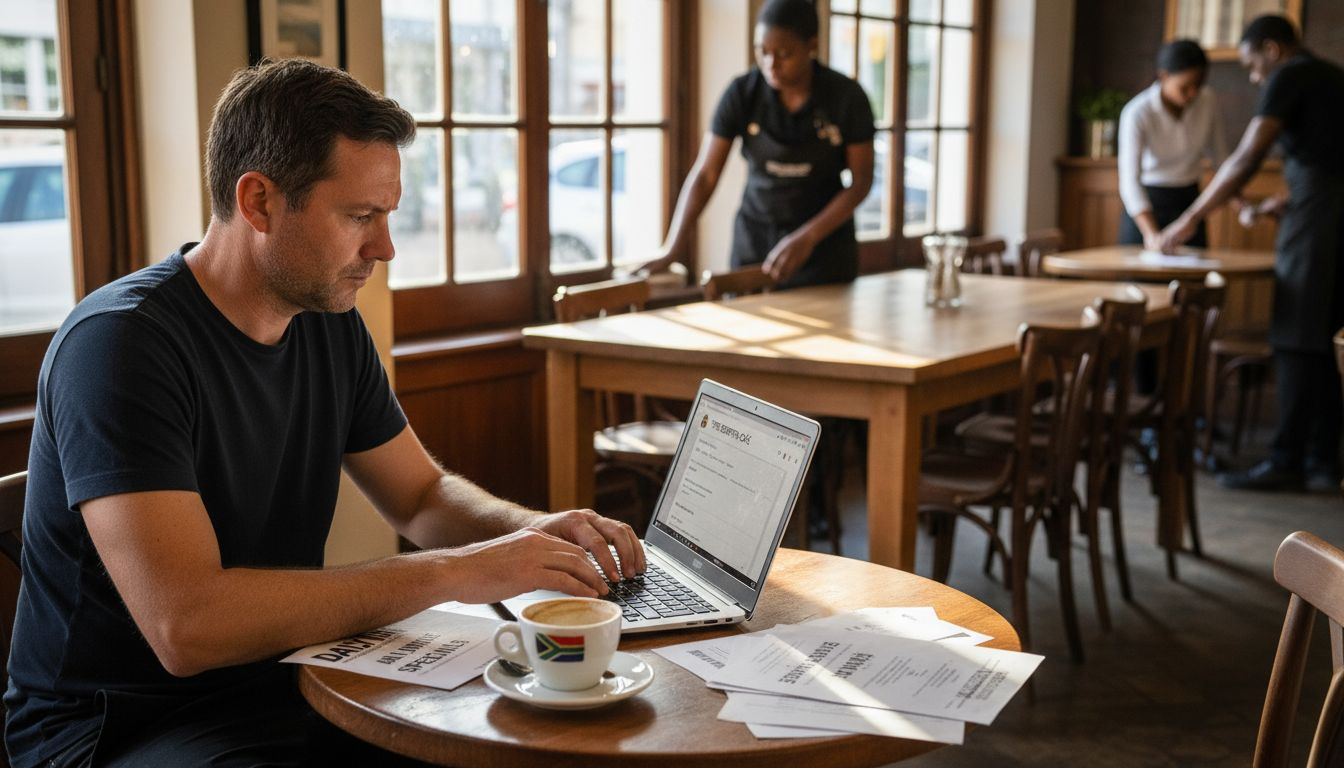
One of the most powerful features of GMB is the ability to showcase your food through photos and videos. High quality images of your dishes, dining space, and team help potential customers get a real sense of what to expect. You can post updates about daily specials, new menu items, or upcoming events directly on your GMB profile. Customers can also leave reviews and ratings, which significantly influences whether new diners choose your restaurant. Google My Business enhances discoverability through accurate business details like location, hours, menus, and customer reviews. In South Africa’s competitive restaurant scene, having hundreds of positive reviews on your GMB profile can be the difference between a busy Friday night and empty tables. People trust other customers’ experiences, so encouraging satisfied diners to leave reviews becomes part of your marketing strategy.
Your GMB profile also serves as a direct communication channel with customers. You can respond to reviews, answer questions in the Q&A section, and build relationships with your community online. When someone asks about your vegetarian options or whether you cater for events, you can respond quickly and professionally. This engagement signals to Google that your business is active and responsive, which boosts your ranking. Additionally, GMB provides valuable insights about how customers are finding you, what they’re searching for, and how they’re interacting with your profile. You’ll see metrics like how many people viewed your photos, called your restaurant, visited your website, or requested directions. This data helps you understand what’s working and what needs improvement in your local SEO strategy.
Pro tip Start by verifying you own your GMB listing by visiting google.com/business, searching your restaurant name, and clicking “claim this business,” then upload at least 10 high quality photos of your best dishes and dining area within the first week, as visual content dramatically increases customer engagement and click through rates.
Optimising on-page and local citations
On-page SEO and local citations work together like a two-part strategy to dominate local search results. Think of on-page SEO as what happens inside your website, while citations are the mentions of your restaurant’s details scattered across the internet. When both are optimised correctly, search engines get consistent, reliable signals that your restaurant is legitimate, relevant, and worth ranking highly. Many restaurant owners focus only on one or the other, but the real power comes from treating them as a unified system that reinforces your local authority.
Optimising on-page SEO involves ensuring website content is relevant and uses local keywords strategically while providing valuable information to visitors. For a restaurant in Durban, this means your website pages should naturally include terms like “seafood restaurant Durban,” “fine dining near the beachfront,” or “best steaks in Umhlanga.” Your page titles, headings, meta descriptions, and body content should all work together to tell search engines what your restaurant is about and where you are located. If you operate a vegan café in Stellenbosch, your homepage might optimise for “plant based café Stellenbosch” and “organic vegan food Winelands,” while individual pages optimise for specific offerings like “dairy free desserts” or “gluten free options.” The key is making sure every page on your website serves a purpose and targets relevant local search terms that actual customers are using. Your website should load quickly on mobile devices, have clear navigation, and provide genuine value through content like blog posts about local ingredients, chef profiles, or seasonal menu highlights.
Local citations are equally important. A citation is simply a mention of your restaurant’s name, address, and phone number (NAP) on external websites. These can appear on Google Maps, Yelp, TripAdvisor, local business directories, chamber of commerce listings, or industry specific sites. Local citations appear in community and local business directories which help both users and search engines confirm the existence and relevance of your restaurant. The more consistently your NAP appears across reputable sites, the stronger your local SEO becomes. Google uses citations as a trust signal. If your restaurant is listed in dozens of verified business directories with consistent information, Google assumes you are a legitimate, established business. Inconsistencies hurt you though. If your restaurant name appears as “Joe’s Italian Kitchen” in one directory, “Joes Italian Kitchen” in another, and “Joseph’s Kitchen” in a third, with different phone numbers or addresses, search engines get confused and your ranking suffers. This is why citation management matters.
Building your citation foundation starts with the most important ones. Make sure your business details are correct on Google My Business, then expand to industry leaders like Yelp, TripAdvisor, Uber Eats, and local South African directories. Verify or create listings on Gumtree, Yellow Pages South Africa, and local chamber of commerce sites. Each citation should have identical NAP information. Update your website’s footer and contact page with the same details too. When you’re ready to grow beyond managing citations yourself, local SEO citations can be optimised through systematic processes that ensure accuracy and consistency across platforms. Some restaurants struggle with this because it feels tedious, but citations directly impact whether customers find you or your competitor when they search for restaurants in your area. The combination of strong on-page content and widespread consistent citations creates a barrier to entry that competitors find difficult to overcome.
Pro tip Audit your current citations today by searching your restaurant name on Google, Yelp, and TripAdvisor, then create a simple spreadsheet documenting your exact business name, phone number, and address as listed in each place, updating any inconsistencies immediately and prioritising the top 5 directory sites first.
Building quality local backlinks ethically
A backlink is simply another website linking to yours. When a reputable food blog writes about your restaurant and links to your website, or when a local community organisation mentions your restaurant in an article with a link, that’s a backlink. Search engines treat backlinks like votes of confidence. The more quality backlinks pointing to your restaurant’s website, the more authoritative Google considers your site, and the higher you rank in search results. However, not all backlinks are equal. A link from a spammy website stuffed with advertisements means almost nothing. A link from a respected local publication or trusted community partner means everything. This is why ethical link building matters.
Building quality backlinks involves acquiring links from relevant, authoritative local websites to improve search engine trust and rankings. The emphasis here is on “ethical.” You cannot simply pay for links or spam websites asking for links. Google penalises this behaviour, potentially destroying your rankings. Instead, ethical link building means creating genuine relationships with local businesses, journalists, and community leaders who would naturally want to mention your restaurant because it genuinely deserves attention. For a restaurant in Cape Town, this could mean partnering with a local food blogger who visits your restaurant, loves the food, and writes an authentic review with a link. It could mean sponsoring a community charity event and having the event organisers link to your website from their page. It could mean being featured in a local lifestyle magazine’s article about “best new restaurants in the Winelands,” complete with a link. These connections feel natural because they are natural.
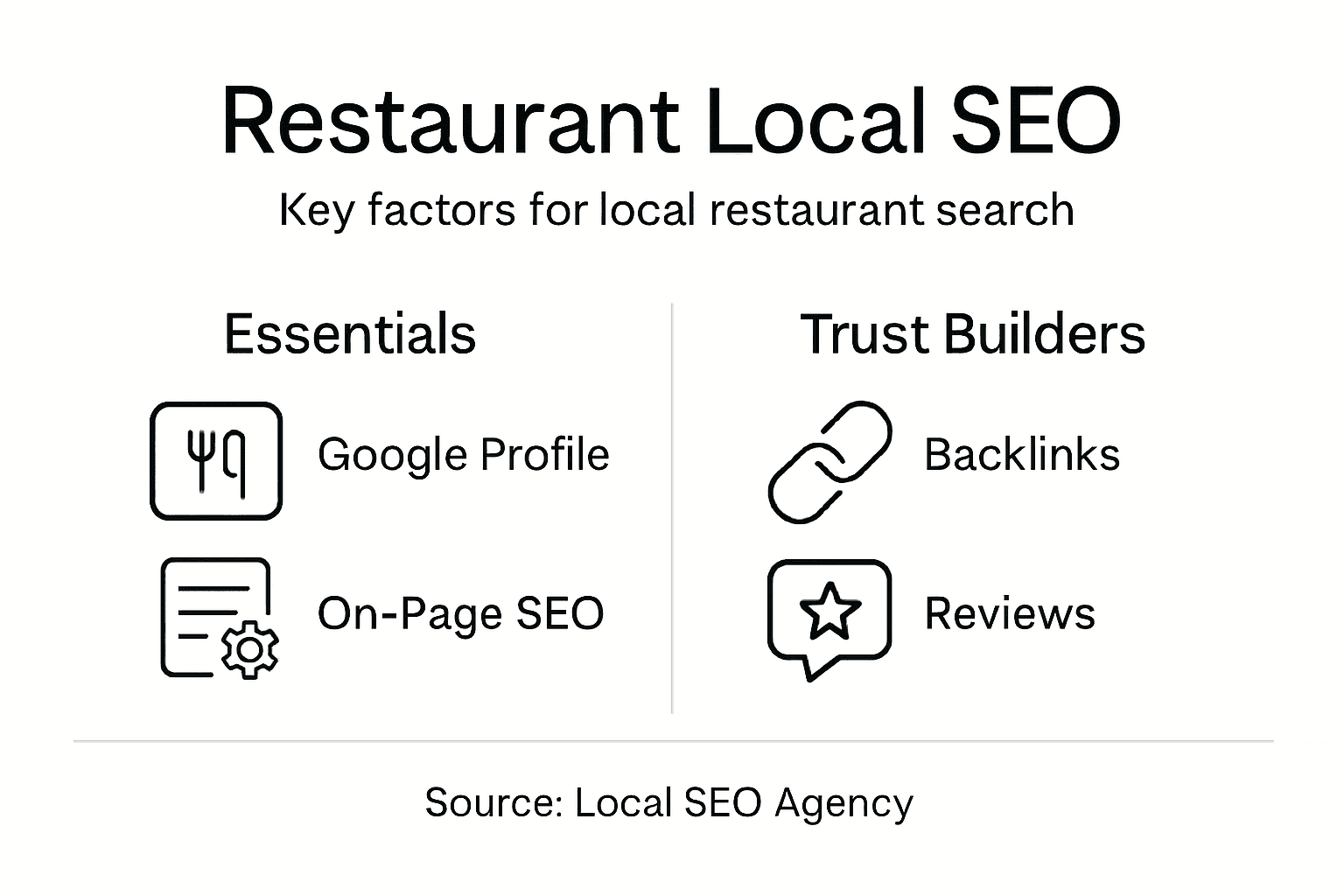
Start by identifying websites and organisations that your target customers already trust. Think about where your ideal customers spend time online. Local business directories, community websites, tourism boards, and industry publications all matter. Contact local food journalists and bloggers, but do so authentically. Don’t send generic link requests. Read their work, leave thoughtful comments, engage with their content, and then reach out with something genuinely valuable. Sponsor local events or community causes aligned with your brand values. When you support a local school’s fundraiser or a charity’s cause, they will often mention your business on their website and social media. Partner with complementary businesses. If you run a wine bar, partner with a local winery or vineyard and create mutually beneficial content that links both websites. Write guest blog posts for local publications, contribute expert insights to community articles, or participate in local podcasts and have them link to your website. The key principle is mutual value.
Ethical link building emphasises relationship building and avoiding manipulative practices rather than quick wins. This approach takes longer than buying links or joining sketchy link schemes, but it builds sustainable authority that compounds over time. When you build genuine relationships with local media, bloggers, and community leaders, they become ongoing sources of backlinks and referrals. They mention your restaurant again and again. Their audiences trust their recommendations, so clicks from those backlinks convert into real customers. You build a reputation as a restaurant owner who cares about the community, not just squeezing every rand from customers. This reputation attracts employees who want to work somewhere with purpose, it attracts media coverage, and it attracts loyal customers who become advocates for your business. Compare this to a restaurant that buys cheap links and gets penalised by Google within months. The restaurant disappears from search results, customers can’t find them, and all that investment evaporates.
Pro tip Start by making a list of 10 local websites, food bloggers, tourism organisations, and community groups that your target customers already follow, then reach out to each with a genuine, personalised message offering something of value rather than asking for a link, whether that is a story angle, an exclusive offer for their audience, or a partnership opportunity.
Common SEO mistakes South African restaurants make
Many South African restaurants lose customers to competitors simply because they make preventable SEO mistakes. These aren’t mistakes born from malice or stupidity. They come from restaurants prioritising what feels urgent in the moment—managing staff, preparing food, handling customer complaints—over long-term visibility. The problem is that SEO compounds over time. A restaurant that starts optimising today gains authority over months. A restaurant that waits another year falls further behind. By the time they realise their online presence is costing them business, their competitors have already captured most of the local search traffic. Understanding these common pitfalls helps you avoid them.
One of the biggest mistakes is ignoring or severely underutilising Google My Business. Many restaurant owners claim their GMB listing but never complete the profile fully. They leave out crucial information like hours of operation, or they list incorrect hours that confuse potential customers. They upload no photos or upload grainy, low quality pictures that don’t showcase their food appealingly. They never respond to reviews, leaving negative reviews unanswered and damaging trust. They don’t use the posts feature to announce specials or new menu items. This is leaving money on the table. Another critical error is inconsistent business information across platforms. A restaurant might list its phone number as 021 555 1234 on its website, 021 555 1235 on Google My Business, and 021 555 4321 on TripAdvisor. Inconsistent citation information and insufficient use of Google My Business features limit local search visibility and confuse both search engines and customers. Google cannot verify your business if information keeps changing. Your restaurant appears less trustworthy. Potential customers trying to call you cannot reach you because they have the wrong number.
Mobile optimisation is another area where South African restaurants stumble badly. Your website might look beautiful on a desktop computer, but if it’s a nightmare to navigate on a smartphone, you’ve lost most of your potential customers. Over 70 percent of restaurant searches happen on mobile devices. Someone searches for “Italian restaurants near me” while sitting in traffic, and your website takes forever to load or displays text too small to read. They bounce to a competitor’s site that actually works on mobile. You never get the chance to show them your menu or hours. Optimising for mobile users effectively is non-negotiable. Additionally, many restaurants fail to engage authentically with their online community. They treat their website and social media like a one-way megaphone instead of a conversation. They don’t respond to comments or messages. They ignore customer reviews. They post content that nobody actually cares about. Creating and maintaining an authentic, transparent online presence impacts credibility and customer trust directly. Customers want to feel heard and valued, not ignored.
A final mistake worth highlighting is poor keyword strategy. Many restaurants either do no keyword research at all or obsess over keywords that nobody actually searches for. A restaurant in Fourways might optimise for “best fine dining experience in the galaxy” when they should be optimising for “steakhouse Fourways” or “dinner reservations Sandton.” They create pages nobody visits because they target keywords nobody types into Google. They might also create duplicate content or thin content that provides no real value to visitors. Search engines rank helpful, original content. They penalise pages that copy other websites or provide shallow information. Some restaurants also neglect their online reputation by failing to accumulate positive reviews or by allowing negative reviews to sit unanswered. When a customer leaves a bad review about a rude waiter or cold food, responding professionally and offering a solution can turn that negative into a positive. Ignoring it tells future customers that your restaurant doesn’t care about feedback.
This table highlights common SEO mistakes by restaurants in South Africa and their consequences:
| Mistake | Typical Effect on Business | Solution |
|---|---|---|
| Incomplete GMB profile | Customers see outdated or missing details | Update and optimise GMB listing |
| Inconsistent NAP info | Lower Google ranking, customer confusion | Standardise info on all directories |
| Poor mobile website experience | Visitors leave quickly, lost reservations | Optimise site for speed and mobile devices |
| Ignoring online reviews | Negative perception, missed improvement | Respond professionally and encourage reviews |
| Weak local keyword strategy | Website fails to rank for relevant searches | Research effective local search terms |
Pro tip Audit your current SEO health this week by checking that your Google My Business information matches exactly on your website, Yelp, and TripAdvisor, testing your website on a mobile phone to ensure it loads quickly and displays properly, and reading your last 20 reviews on all platforms to identify patterns and respond professionally to any complaints.
Unlock Your Restaurant’s Full Potential with Expert Local SEO Support
Struggling to stand out in South Africa’s competitive restaurant industry can be overwhelming. The article highlights crucial challenges such as optimising your Google My Business profile, managing consistent local citations, and building trustworthy backlinks — all essential for winning local search. The pain points of unclear online presence, poor mobile experience, and ineffective review management can cost you valuable bookings and foot traffic. You do not have to navigate this alone.
At Local SEO Agency, we specialise in customised, ethical SEO strategies tailored specifically for local restaurants eager to boost visibility and attract more customers. Our services ensure your business information is consistent everywhere, your website is optimised for local keywords and mobile users, and your online reputation shines with genuine reviews. We partner with you to build sustainable authority through quality backlinks and engaging content that resonates with your community.
Take control of your restaurant’s future today by reaching out for a free consultation at Local SEO Agency. Let us help you transform local search challenges into loyal customers with proven expertise in local SEO optimisation, backlink building, and Google My Business management. Your competitors are already optimising — make sure you do not fall behind.
Frequently Asked Questions
How does SEO for local restaurants work?
Local SEO for restaurants involves optimizing your online presence to ensure that people in your area can find your business when they search for food options. This includes having accurate business information, optimizing your Google My Business profile, and using local keywords on your website.
Why is Google My Business important for my restaurant?
Google My Business is crucial because it acts as your restaurant’s digital storefront on Google Search and Maps. An optimized GMB profile can significantly increase your visibility, allowing potential customers to find your restaurant’s details, such as hours of operation, menu, and location.
What are local citations and why do they matter?
Local citations are mentions of your restaurant’s name, address, and phone number on other websites and directories. They help search engines verify your business’s existence and relevance, improving your local SEO ranking when consistently managed across reputable sites.
What common SEO mistakes should local restaurants avoid?
Common SEO mistakes include ignoring or underutilizing Google My Business, having inconsistent business information across platforms, neglecting mobile optimization, and failing to engage with customers about reviews. Avoiding these pitfalls can help improve your online presence and attract more customers.
Recommended
- The Secret to Success: Local SEO Optimization Service – LSA SEO Agency
- Unlock Success: Local SEO for Small Businesses Made Easy – LSA SEO Agency
- Local SEO Optimization: A Game Changer for Small Businesses – LSA SEO Agency
- Local SEO Services That Drive Traffic to Your Door – LSA SEO Agency
source https://localseoagency.co.za/seo-local-restaurants-south-africa/



No comments:
Post a Comment