Website security issues can quickly turn a growing online presence into a stressful daily risk for many South African small business owners. Search engines like Google expect a secure site when deciding who appears at the top of local search results. Addressing vulnerabilities does more than protect you from hackers, it directly shapes how your business is seen and found online. This guide unpacks the connection between website security and SEO basics, helping your business stay confident and visible in every search.
Table of Contents
- Website Security And SEO Basics Explained
- Key Website Security Risks For Small Business
- How Security Affects Local SEO Rankings
- SSL, HTTPS And Google’s Latest Requirements
- Avoiding Common Security And SEO Mistakes
- Steps To Safeguard Your Site And Rankings
Key Takeaways
| Point | Details |
|---|---|
| Interconnection of Security and SEO | Website security is crucial for improving search engine rankings; strong security practices signal trustworthiness to both search algorithms and customers. |
| Mitigate Security Risks | Small businesses should be aware of common cybersecurity threats and implement measures such as multi-factor authentication and regular security audits to protect their online presence. |
| Importance of SSL and HTTPS | Securing your website with SSL certificates and using HTTPS is mandatory for maintaining search visibility and user trust in today’s digital landscape. |
| Proactive Security Management | Treat website security as an ongoing process; continuous monitoring and updates are essential to safeguard digital assets and enhance SEO performance. |
Website Security and SEO Basics Explained
Website security and search engine optimisation (SEO) are deeply interconnected aspects of digital strategy that South African businesses cannot afford to ignore. Understanding how these elements work together helps protect your online presence and improve search engine rankings. Search engine crawlers evaluate multiple technical factors when determining website credibility and visibility.
The fundamental connection between security and SEO revolves around several critical technical elements:
- Protection against malware and hacking attempts
- Maintenance of website performance and speed
- Ensuring secure data transmission protocols
- Implementing robust authentication mechanisms
- Regular security updates and vulnerability patches
Search engines like Google prioritise websites that demonstrate strong security practices. When your website has SSL certification, uses HTTPS protocols, and maintains clean technical infrastructure, you signal trustworthiness to both search algorithms and potential customers. Unaddressed security vulnerabilities can lead to significant ranking penalties, potentially rendering your online presence invisible to potential clients.
Website Security Signals that directly impact SEO performance include:
- SSL/HTTPS encryption status
- Protection against common cyber threats
- Fast loading times with minimal security-related interruptions
- Clean backend with no malicious code injections
- Regular security maintenance and monitoring
Pro tip: Invest in continuous security monitoring and implement multi-layered protection strategies to safeguard both your website’s performance and search engine ranking potential.
Key Website Security Risks for Small Business
Small businesses in South Africa face increasingly sophisticated cybersecurity challenges that can devastate their online presence. Cybersecurity risks range from simple password vulnerabilities to complex malware attacks that can compromise entire digital infrastructures.
The most critical website security risks for small businesses include:
- SQL Injection attacks that exploit database vulnerabilities
- Cross-Site Scripting (XSS) targeting website visitors
- Ransomware that locks critical business data
- Phishing attempts designed to steal sensitive information
- Weak authentication mechanisms enabling unauthorized access
Malicious actors often target small businesses precisely because they typically lack robust security infrastructure. Cybersecurity vulnerabilities can lead to significant financial losses, reputational damage, and potential permanent removal from search engine results. Understanding these risks is the first step in developing a comprehensive digital protection strategy.

Potential Consequences of Website Security Breaches:
Here’s how common website security risks affect small businesses in South Africa:
| Risk Type | Business Impact | SEO Impact |
|---|---|---|
| SQL Injection | Data theft, site downtime | Loss of search rankings |
| Cross-Site Scripting (XSS) | Customer data exposure | Negative trust signals |
| Ransomware | Operational disruption | Site de-indexed if not resolved |
| Phishing Attacks | Reputational harm | User warnings reduce traffic |
| Weak Authentication | Unauthorised access risk | Increased vulnerability indicators |
- Complete website shutdown
- Loss of customer trust
- Permanent search engine ranking penalties
- Financial losses from data theft
- Potential legal liabilities
Pro tip: Implement multi-factor authentication and conduct regular security audits to proactively identify and mitigate potential website vulnerabilities.
How Security Affects Local SEO Rankings
Local businesses in South Africa cannot ignore the critical relationship between website security and search engine rankings. Website cybersecurity impacts search performance by directly influencing user trust and engagement metrics that search engines prioritize.
Key security factors that determine local SEO rankings include:
- HTTPS encryption status
- Website malware protection
- Clean website infrastructure
- Reduced security vulnerability indicators
- Consistent performance and uptime
Search Engine Security Evaluation Metrics:
- User data protection levels
- Site loading speed with security protocols
- Presence of security certificates
- Historical website security performance
- Absence of previous security breaches
HTTPS implementation represents a critical ranking factor that signals trustworthiness to search algorithms. Google actively penalises websites displaying security warnings, which can dramatically reduce local search visibility and potential customer interactions. Non-secure websites risk being flagged with intimidating browser warnings that immediately deter potential customers and harm search rankings.
Local businesses must view cybersecurity as an integral component of their digital marketing strategy, not just a technical requirement.
Pro tip: Regularly update security certificates, implement multi-factor authentication, and conduct comprehensive security audits to maintain optimal local SEO performance.
SSL, HTTPS and Google’s Latest Requirements
Securing your website with robust SSL certificates is no longer optional for South African businesses seeking online visibility. Google’s Search Essentials now mandate comprehensive security protocols that directly impact search rankings and user trust.
Key SSL and HTTPS requirements for websites include:
- Valid SSL certificate from recognised authorities
- Secure transmission of all web resources
- Consistent HTTPS implementation across entire site
- Updated encryption standards
- Regular certificate maintenance
Critical SSL Implementation Steps:
- Obtain SSL certificate from trusted provider
- Configure server for complete HTTPS coverage
- Redirect all HTTP traffic to secure HTTPS
- Update internal links to secure protocol
- Verify full site encryption
SSL certificate industry changes are driving more stringent verification processes. By March 2028, website owners must adopt more automated and secure certificate validation methods to maintain search engine credibility and prevent potential security fraud.
Websites without proper SSL protection risk being flagged as insecure, potentially losing critical search visibility and customer trust.
Pro tip: Schedule quarterly SSL certificate reviews and invest in automated renewal processes to ensure continuous website security and search engine compliance.
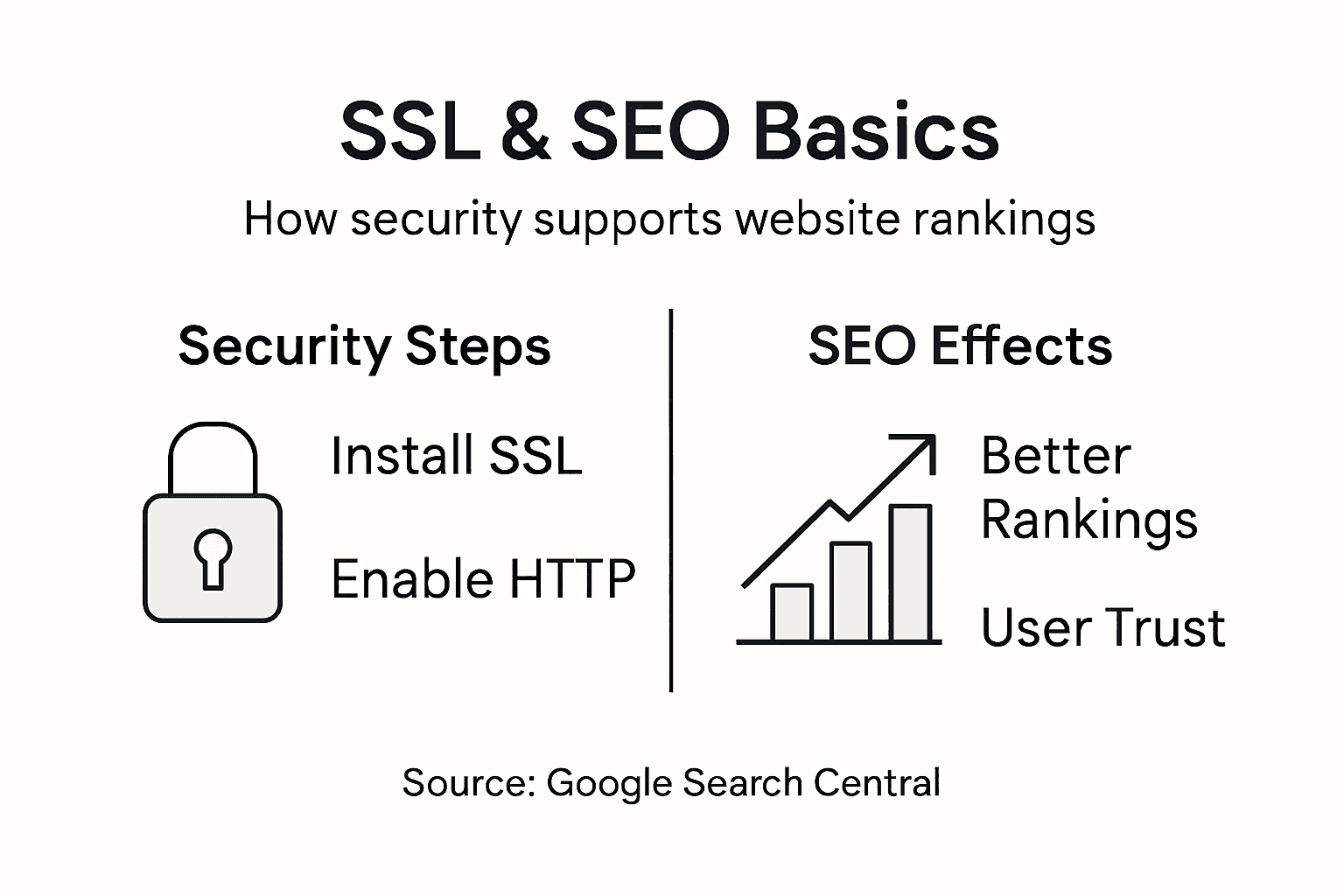
The table below summarises essential differences between basic and advanced SSL/HTTPS practices:
| Approach | Level of Security | Compliance with Google | Maintenance Requirement |
|---|---|---|---|
| Basic SSL | Entry-level | Minimal compliance | Annual manual renewal |
| Advanced SSL | High (EV/OV SSL) | Meets all standards | Automated, regular checks |
| Full HTTPS | Complete site | Required for ranking | Ongoing link and redirect fix |
Avoiding Common Security and SEO Mistakes
South African businesses frequently stumble into critical digital pitfalls that compromise both website security and search engine performance. Common SEO mistakes can dramatically undermine online visibility and expose websites to significant risks.
Most prevalent security and SEO vulnerabilities include:
- Duplicate content creation
- Inadequate keyword strategies
- Slow website loading speeds
- Poor mobile device optimization
- Neglecting SSL certificate maintenance
- Insufficient cybersecurity protocols
Critical Performance-Impacting Mistakes:
- Ignoring technical SEO infrastructure
- Failing to implement secure HTTPS protocols
- Producing low-quality, non-original content
- Overlooking mobile responsiveness
- Neglecting regular security audits
Cybersecurity SEO challenges often stem from overlooking fundamental technical elements that search engines prioritise. Websites with broken links, missing meta descriptions, and inconsistent security measures risk permanent ranking penalties and reduced user trust.
Proactive security management is not an expense, but an essential investment in your digital reputation.
Pro tip: Conduct quarterly comprehensive SEO and security audits to identify and mitigate potential vulnerabilities before they impact your online performance.
Steps to Safeguard Your Site and Rankings
Protecting your website’s digital ecosystem requires a strategic and comprehensive approach that addresses both security vulnerabilities and search engine optimization challenges. Google Search Console offers critical tools for monitoring and maintaining website health and performance.
Essential steps for safeguarding your site and search rankings include:
- Implementing robust SSL certificates
- Conducting regular security audits
- Monitoring website performance metrics
- Updating software and plugins consistently
- Creating strong, unique passwords
- Installing web application firewalls
- Backing up website data regularly
Comprehensive Security and SEO Protection Strategy:
- Install SSL certificate
- Enable two-factor authentication
- Perform monthly security scans
- Update all website software
- Monitor website analytics
- Create complex password protocols
- Implement server-side security measures
Small businesses must treat website security as an ongoing process, not a one-time implementation. Continuous monitoring, regular updates, and proactive vulnerability assessment are crucial for maintaining search engine credibility and protecting digital assets.
Cybersecurity is not an expense, but an essential investment in your business’s digital reputation and customer trust.
Pro tip: Develop a comprehensive digital security checklist with quarterly review dates and assign specific responsibilities to team members to ensure consistent website protection.
Strengthen Your Website Security and Boost Local SEO Today
Website security challenges like weak authentication and missing SSL certificates not only put your South African business at risk but also threaten your Google rankings and customer trust. With cyber threats evolving constantly, safeguarding your website with robust protection and SEO strategies is essential for maintaining visibility and beating competitors in local search results. Avoid ranking penalties and user mistrust by proactively addressing these vulnerabilities.
Partner with our digital marketing experts at Local SEO Agency to implement advanced SSL/HTTPS protocols, conduct regular security audits, and optimise your website’s technical SEO. Our custom solutions ensure your site is secure, fast, and fully compliant with Google’s latest requirements so you can enjoy improved search rankings and stronger customer confidence. Take control of your online presence now and secure your business future. Contact us today via our consultation page and protect your website while boosting your local SEO performance.
Frequently Asked Questions
What is the connection between website security and SEO?
Website security and SEO are interconnected as secure websites are prioritized by search engines, improving visibility and search rankings. Security elements like SSL certificates, HTTPS protocols, and protection against malware contribute to a trusted site that attracts both users and search algorithms.
How does website security impact local SEO rankings?
Website security affects local SEO rankings by influencing user trust and engagement metrics. Secure websites with robust SSL encryption and minimal vulnerabilities are more likely to rank higher in local search results than insecure sites.
What are common security risks that small businesses face online?
Common security risks for small businesses include SQL injection, cross-site scripting (XSS), ransomware attacks, phishing attempts, and weak authentication mechanisms. These vulnerabilities can result in reputational damage, financial losses, and potential penalties in search engine rankings.
How can I improve the security of my website to boost its SEO performance?
To improve your website’s security and consequently boost its SEO performance, implement SSL certificates, conduct regular security audits, ensure consistent software updates, use strong passwords, and install web application firewalls.
Recommended
- Why SEO Matters for Small Businesses in South Africa
- SEO Basics for Businesses – Driving Local Growth
- Local Search Ranking Factors – How They Shape SA Business
- 7 SEO Best Practices Every South African SME Should Know
- SEO basics and how to master your rankings – 40Q
source https://localseoagency.co.za/website-security-seo-south-africa/



No comments:
Post a Comment