Saturday, January 10, 2026

Optimising Images for SEO: A Step-by-Step Guide

Most South-African small businesses miss out because over 60 percent of local searches lead to customer visits from visual results. For South-African owners eager to stand out online, understanding how images impact search rankings is both powerful and practical. This guide reveals clear steps to assess and optimise every image on your website, giving you a competitive edge in attracting local customers who are ready to buy.

Table of Contents

Quick Summary

Key Point Explanation
1. Assess image quality and relevance Review all images on your website to ensure they meet quality standards and add value to your content.
2. Choose optimal image formats Utilize formats like WebP for compression and clarity, ensuring they are appropriate for the type of image being used.
3. Resize images for faster loading Match image dimensions to display size and compress files to enhance loading speed and overall website performance.
4. Use descriptive file names and alt text Create meaningful file names and alt text to improve search engine visibility and accessibility for users with disabilities.
5. Implement structured image markup Enhance local SEO by adding metadata related to location and context to your images, helping search engines categorize your content better.

Step 1: Assess existing images for SEO suitability

When optimising your website for search engines, evaluating your current image assets becomes crucial. This step involves systematically reviewing all images to determine their search engine and user experience potential.

Begin by conducting a comprehensive image inventory across your website. Look for images that meet specific quality criteria by checking image relevance and performance carefully. Your assessment should focus on several key elements: image clarity, contextual appropriateness, file size, and alt text quality. Pay special attention to whether each image genuinely supports your content or serves a meaningful purpose.

Carefully examine every image for these critical SEO characteristics: resolution quality, file format compatibility, descriptive alt attributes, and thematic alignment with surrounding content. Websites with strategically chosen images often experience better user engagement and improved search rankings. Remove or replace images that do not contribute positively to your site experience.

Expert Advice: Create a simple spreadsheet tracking each image’s SEO performance to streamline your optimisation process and identify quick improvement opportunities.

Step 2: Select appropriate image formats and sizes

Choosing the right image format and size is critical for optimising your website performance and search engine visibility. This step involves understanding the technical nuances of different image formats and their impact on site speed and user experience.

Designer comparing image formats at desk

Your primary goal is selecting image formats that balance quality and performance. Image format selection should consider several key factors: compression type, browser compatibility, and visual clarity. For most web images, WebP offers superior compression and quality compared to traditional formats like JPEG and PNG. Photographs typically work best with JPEG, while graphics with transparency benefit from PNG or WebP formats. Modern websites increasingly prefer WebP and AVIF formats for their excellent compression and high visual fidelity.

When sizing images, aim for the smallest file size possible without compromising visual quality. Resize images to match their display dimensions precisely to reduce unnecessary data transfer. Large images automatically scaled down by browsers consume more bandwidth and slow page loading times. Compress images using tools that maintain visual integrity while significantly reducing file size.

Here’s a quick comparison of popular web image formats and their ideal uses:

Format Best Use Cases Compression Type Browser Support
JPEG Photographs, complex images Lossy Universal
PNG Graphics, transparency Lossless Universal
WebP Photos, graphics Lossy/Lossless Most modern browsers
AVIF High quality, small size Lossy/Lossless Latest browsers

Expert Advice: Use responsive image techniques that serve different sized images based on device screen dimensions to optimise performance across various devices.

Step 3: Resize and compress images for faster loading

Reducing image file sizes is a crucial step in improving your website performance and search engine rankings. This process helps minimise bandwidth usage and accelerates page loading times that directly impact user experience and SEO performance.

Understanding image compression techniques allows you to strategically reduce file sizes while maintaining visual quality. There are two primary compression methods: lossy and lossless. Lossy compression removes some image data to significantly reduce file size but may slightly reduce image quality. Lossless compression preserves all original image details while still reducing file size. Professional tools like Adobe Photoshop, GIMP, and online compressors can help you achieve optimal results.

To effectively resize and compress images, start by determining the maximum display dimensions required on your website. Aim to create images that match these exact dimensions to eliminate unnecessary pixels. Use automated tools that can batch process multiple images simultaneously, ensuring consistent quality and size across your site. Always preview compressed images to confirm visual integrity before uploading.

Expert Advice: Test your website loading speed after image optimisation using tools like Google PageSpeed Insights to verify performance improvements.

Step 4: Add descriptive file names and alt text

Optimising your images for search engines and accessibility requires strategic file naming and descriptive alternative text. These elements help search engines understand your image content and improve user experience for individuals using assistive technologies.

When creating alt text guidelines, focus on crafting concise yet meaningful descriptions that accurately represent the image. Avoid generic phrases like ‘image of’ and instead provide specific details about the image content, function, and context. For example, instead of ‘dog’, use ‘golden retriever playing fetch in local park’. Aim to keep alt text under 125 characters while ensuring it provides comprehensive information. File names should similarly be descriptive and use lowercase letters with hyphens separating words for optimal readability and SEO performance.

Incorporate relevant keywords naturally into your alt text and file names without resorting to keyword stuffing. Each image description should provide genuine value to users and search engine algorithms. Consider the primary purpose of the image and describe what a person would understand if they could not see the visual content. This approach ensures both accessibility compliance and improved search engine visibility.

Expert Advice: Create a consistent naming convention for your images that includes relevant descriptors and helps track image usage across your website.

Step 5: Implement structured image markup for local relevance

Structured image markup helps search engines understand the context and geographic significance of your visual content, which is particularly important for local businesses seeking to improve their online visibility. By adding precise metadata and semantic information, you can enhance your images searchability and relevance.

Structured image markup techniques enable you to provide additional context about each image beyond what is visible. This includes embedding location details, business information, and thematic metadata that helps search engines better categorise and display your images in local search results. Use schema markup to include specific details like the city, region, business name, and geographic coordinates associated with each image.

Focus on creating rich metadata that accurately represents your local business context. Include information such as the specific location where an image was taken, the business it represents, and any relevant geographical attributes. This approach not only improves your local SEO performance but also helps potential customers find your content more easily when searching for location specific information.

Expert Advice: Use Google’s Structured Data Testing Tool to validate your image markup and ensure maximum compatibility with search engine requirements.

Step 6: Test image performance and SEO impact

Measuring your image optimization efforts is crucial for understanding how visual content contributes to your website’s search engine performance. This final step involves comprehensive testing to validate the effectiveness of your image SEO strategies.

Infographic outlining main image SEO steps

Image performance metrics provide insights into how well your visual content supports overall website performance. Begin by using tools like Google PageSpeed Insights, Google Search Console, and Web Vitals to analyse loading times, user engagement, and search visibility. Pay special attention to metrics such as Largest Contentful Paint (LCP), which measures how quickly your primary image content loads, and Cumulative Layout Shift (CLS), which evaluates visual stability during page rendering.

Conduct systematic tests to track improvements in organic search traffic, image search rankings, and user interaction rates. Compare your website’s performance before and after image optimization, looking for increases in click through rates, reduced bounce rates, and enhanced user engagement. Consider using analytics platforms that offer detailed visual content performance tracking to gain comprehensive insights into your image SEO effectiveness.

For reference, here are key performance metrics to track image SEO impact:

Metric What It Measures Business Impact
Largest Contentful Paint Speed of main image loading Improved user experience
Cumulative Layout Shift Visual stability on load Lower bounce rates
Organic Image Clicks Clicks from image search Increased site traffic
Conversion Rate User actions from image pages Higher sales/leads

Expert Advice: Create a quarterly image performance review process to continuously monitor and refine your visual content strategy based on empirical data.

Boost Your Local SEO with Expert Image Optimisation Support

Struggling with slow website loading times or poor image SEO ranking despite following best practices like resizing, compressing, and adding descriptive alt text Your business organisation deserves tailored solutions that make your images drive traffic not hold you back. At Local SEO Agency, we understand the critical impact of image optimisation on user experience and search visibility for South African businesses. We help you assess your current visuals for SEO suitability and implement advanced structured markup that enhances your local search relevance.

https://localseoagency.co.za/contact/

Take control of your website’s performance and give your images the strategic boost they need. Contact our team today to receive customised advice and hands-on optimisation services that improve Largest Contentful Paint scores, reduce bounce rates, and increase conversions. Don’t miss out on turning your image assets into powerful local SEO rankings. Reach out now via our contact page and start transforming your online presence.

Frequently Asked Questions

How do I assess the SEO suitability of my existing images?

To assess the SEO suitability of your existing images, conduct a comprehensive inventory of all images on your website. Focus on their clarity, file size, alt text quality, and whether they support your content meaningfully, then create a spreadsheet to track their SEO performance.

What image formats should I choose for optimal website performance?

For optimal website performance, use formats like WebP for most images, as it offers superior compression. Keep graphics that require transparency in PNG format, and use JPEG for photographs to ensure high quality while maintaining smaller file sizes.

How can I resize and compress images effectively for my website?

To resize and compress images effectively, determine the maximum display dimensions on your site and create images matching those exact dimensions. Aim for the smallest file size possible without sacrificing quality; consider using batch-processing tools to streamline the resizing process.

What should I include in the alt text and file names of my images?

In the alt text and file names, include concise descriptions that accurately represent the image content and context, avoiding generic phrases. Use keywords naturally, keeping file names lowercase with hyphens separating words to enhance readability and SEO performance.

How do I implement structured image markup for improved local SEO?

To implement structured image markup, add precise metadata about your images, such as location details and business information. Use schema markup to convey geographic relevance, helping search engines categorize your images for better visibility in local search results.

What metrics should I track to measure the SEO impact of my images?

Track metrics like Largest Contentful Paint (LCP) and Cumulative Layout Shift (CLS) to measure image loading speed and visual stability. Regularly review these metrics alongside organic traffic and click-through rates to gauge the effectiveness of your image optimisation efforts.


source https://localseoagency.co.za/optimising-images-for-seo-step-guide/

Friday, January 9, 2026

On-Page SEO Explained: Boost Local Business Growth

Fewer than 50 percent of South African small businesses see consistent growth from their online presence. For busy business owners, understanding why some webpages rank above others can be a game-changer. Effective on-page SEO goes beyond keywords and technical tweaks, helping your website attract more relevant local visitors. Discover practical steps to strengthen your search performance and connect with customers searching for trusted south-african solutions.

Table of Contents

Key Takeaways

Point Details
On-Page SEO Definition On-Page SEO is the process of optimising individual web pages to enhance search engine rankings and drive targeted traffic.
Core Ranking Factors Strategic keyword placement, content quality, and technical optimisation are crucial for improving visibility for South African SMEs.
Content Optimisation Creating comprehensive, targeted content is essential for addressing user intent and enhancing engagement.
Local SEO Signals Consistent and precise local business information enhances credibility and helps attract nearby customers.

What On-Page SEO Really Means

On-Page SEO represents the strategic process of optimising individual web pages to improve search engine rankings and drive targeted organic traffic. At its core, this approach focuses on enhancing both content quality and technical elements that help search engines understand and evaluate webpage relevance. Search engine optimization strategies involve carefully crafting content that meets user intent while satisfying complex algorithmic requirements.

Specifically for local businesses in South Africa, on-page SEO means methodically improving webpage elements like title tags, meta descriptions, headers, and content structure. These technical optimisations signal to search engines exactly what your webpage offers, helping match user queries with precise, relevant information. This includes selecting appropriate keywords, creating compelling content, and ensuring your webpage provides clear, valuable information that directly addresses potential customer questions.

The most critical on-page SEO components include strategic keyword placement, HTML tag optimization, content quality, and user experience design. Successful implementation means creating webpages that are not just search-engine friendly, but genuinely helpful to your target audience. Search engines increasingly prioritize user-focused content that demonstrates expertise, authority, and trustworthiness.

Pro tip: Regularly audit your webpage content every 3-6 months to ensure ongoing relevance, updating keywords and information to maintain strong search engine performance.

Core On-Page Ranking Factors for SMEs

Local South African small and medium enterprises must understand the critical on-page ranking factors that directly impact their digital visibility. Core ranking factors are fundamental to improving search engine performance, with content quality, technical optimization, and user experience forming the cornerstone of effective SEO strategies.

The most significant on-page ranking factors for SMEs include strategic keyword placement, compelling content development, and technical website elements. This means crafting high-quality, relevant content that directly addresses customer needs while ensuring your webpage’s technical structure supports easy navigation and fast loading times. Key elements include optimising title tags, meta descriptions, header structures, and ensuring mobile responsiveness across all device types.

Business owner writing on-page SEO keywords

Search engines like Google prioritize websites that demonstrate expertise, authority, and user-centricity. For South African small businesses, this translates to creating locally relevant content that speaks directly to your target market’s specific needs and challenges. Critical technical factors such as page speed, internal linking, structured data implementation, and mobile optimization play a crucial role in determining your website’s search engine ranking potential.

Pro tip: Conduct a monthly technical SEO audit to identify and quickly resolve potential performance issues that could negatively impact your search engine rankings.

Here’s a summary of how core on-page SEO factors impact South African SMEs:

Ranking Factor Description Direct SME Benefit
Keyword Placement Integrating relevant search terms Attracts targeted local visitors
Content Quality Authoritative, locally focused Builds trust with SA audience
Technical Elements Fast load, mobile-friendly layout Improves user retention rates
Internal Linking Logical site navigation Boosts page authority

Content Optimisation Tactics for Results

Local businesses in South Africa need a strategic approach to content optimization that goes beyond simple keyword stuffing. Effective content strategies involve creating comprehensive, targeted content that genuinely addresses user search intent while maintaining high-quality, engaging writing that resonates with your specific audience.

Successful content optimization requires a multi-layered approach. This means carefully selecting keywords with genuine traffic potential, structuring content with clear and compelling headings, and ensuring your writing speaks directly to your target market’s specific needs. Key tactics include developing in-depth content that thoroughly explores a topic, incorporating relevant multimedia elements, and maintaining a conversational yet professional tone that builds trust and authority.

Modern content optimization also demands continuous refinement. South African small businesses must regularly update their content, ensuring it remains relevant, accurate, and aligned with the latest search engine algorithms. This involves analyzing performance metrics, understanding user engagement, and being willing to refresh and improve existing content. By creating comprehensive topic clusters and pillar pages, businesses can establish themselves as authoritative sources in their specific industry niches.

Pro tip: Create a content calendar that schedules monthly content audits and updates, allowing you to systematically improve and refresh your website’s most important pages.

Role of Local SEO Signals in Rankings

Local SEO signals are critical for South African small businesses seeking to improve their digital visibility and attract nearby customers. Local SEO optimization involves a complex ecosystem of geographical and contextual signals that help search engines understand a business’s local relevance and credibility.

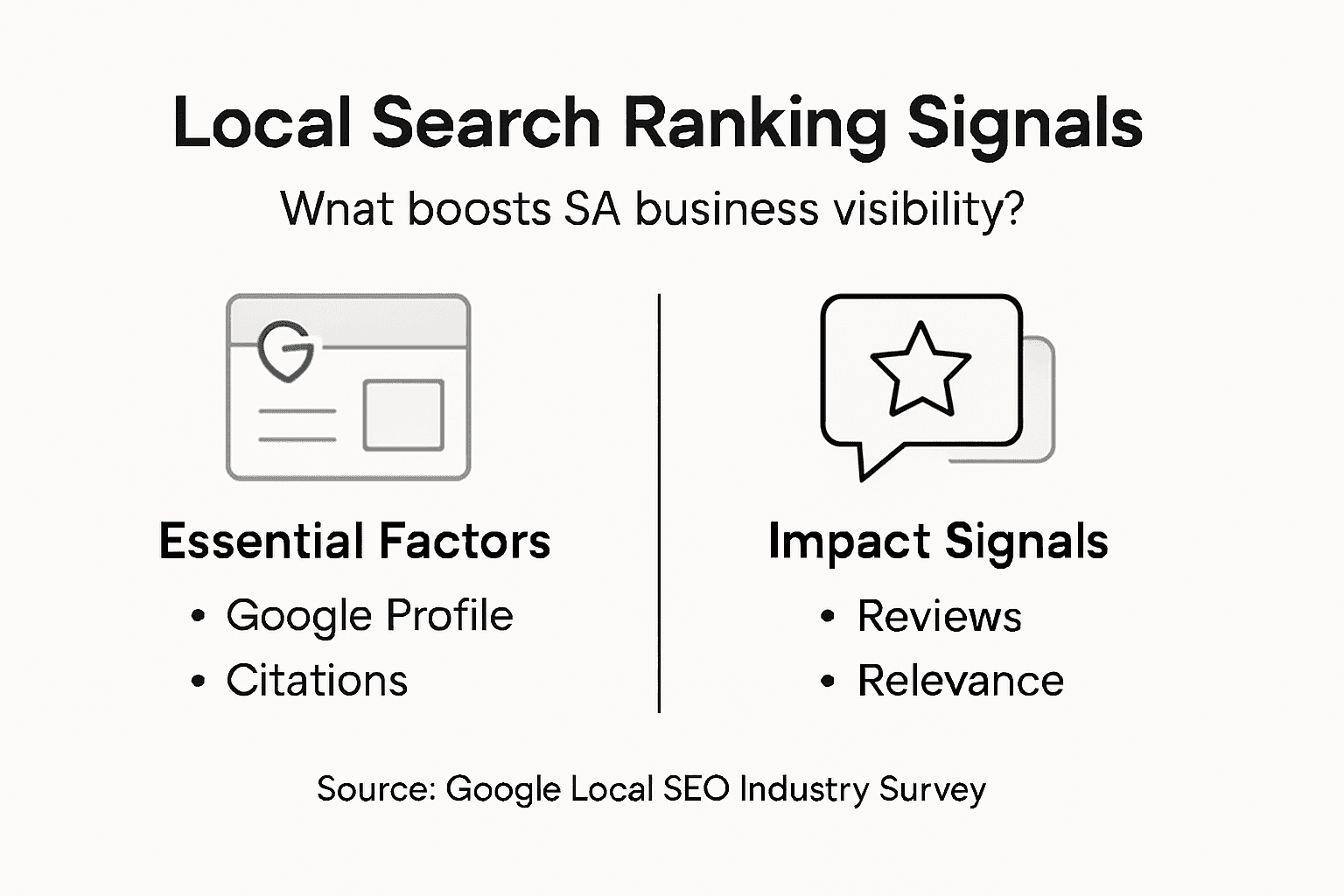
The most important local SEO signals include precise Google My Business listing details, consistent local business citations across online directories, locally relevant content, location-specific keywords, customer reviews, and geographic proximity to searchers. These signals work together to communicate your business’s authenticity, reliability, and relevance to both search engines and potential customers. Businesses must ensure their name, address, and phone number (NAP) are identical across all online platforms, creating a unified and trustworthy digital footprint.

Infographic showing main local SEO signals

For South African businesses, local SEO signals extend beyond basic technical optimization. They represent a strategic approach to demonstrating community connection and local expertise. This means creating content that speaks directly to local audiences, incorporating regional language nuances, highlighting local events or community involvement, and developing a digital presence that reflects the unique characteristics of your specific geographic market.

Pro tip: Conduct a quarterly audit of your local business listings to ensure 100% accuracy and consistency across all online platforms.

Common On-Page SEO Mistakes to Avoid

South African small businesses often stumble into critical on-page SEO pitfalls that can significantly hamper their digital visibility. Common on-page SEO mistakes range from technical oversights to content-related errors that can drastically reduce search engine performance and user engagement.

One of the most prevalent mistakes is keyword mismanagement. This includes both keyword stuffing, which makes content unreadable and triggers search engine penalties, and insufficient keyword optimization that fails to signal content relevance. Businesses must strike a delicate balance, using keywords naturally and strategically within high-quality, informative content. Equally critical are technical elements like meta descriptions, title tags, and image alt text, which many local enterprises either neglect or implement poorly.

Additionally, South African businesses frequently overlook the importance of comprehensive internal linking and content structure. Poorly organized webpages with fragmented information, lack of clear hierarchical headers, and minimal internal navigation can confuse both users and search engine crawlers. Effective on-page SEO requires creating a logical, user-friendly content architecture that guides visitors seamlessly through information while providing clear pathways for search engines to understand and index your website’s content.

Pro tip: Implement a monthly content and technical SEO review to systematically identify and rectify potential on-page optimization gaps.

Compare the effects of common on-page SEO mistakes and how to address them:

Mistake Negative Outcome Corrective Action
Keyword Stuffing Lower ranking, poor readability Use keywords naturally
No Meta Descriptions Reduced click-through rates Write concise, relevant summaries
Disorganised Content Visitor confusion, low time-on-page Structure headings logically
Weak Internal Linking Missed ranking opportunities Link related pages consistently

Unlock Your Local Business Potential with Expert On-Page SEO Solutions

If you are struggling to improve your website’s visibility or facing challenges like poor keyword placement, low page speed, or ineffective content structure as discussed in the article On-Page SEO Explained Boost Local Business Growth then you are not alone. These common pain points can hold back your business from attracting targeted local customers and building trust in South Africa’s competitive market. Understanding the importance of technical SEO elements and locally relevant content is the first step but executing these strategies effectively requires specialised knowledge and ongoing optimisation.

Bring your on-page SEO to the next level with our customised digital marketing and SEO services designed specifically for South African SMEs. From strategic keyword integration to mobile-friendly web design and local SEO optimisation our team ensures your online presence demonstrates expertise authority and user-centricity. Start boosting targeted traffic increasing lead generation and improving conversion rates today with the trusted partner that values ethical and results-driven SEO methods.

https://localseoagency.co.za/contact/

Ready to transform your website into a powerful local lead generator Explore our comprehensive local SEO optimisation services and schedule a personalised consultation. Do not let common SEO mistakes hold your business back Contact us now at Local SEO Agency and take the first step towards stronger digital growth. Learn how professional on-page SEO auditing and continuous content optimisation can make all the difference for your business success.

Frequently Asked Questions

What is On-Page SEO and why is it important for local businesses?

On-Page SEO refers to optimizing individual web pages to improve search engine rankings and attract relevant organic traffic. It is essential for local businesses as it enhances content quality and technical elements, ensuring that search engines accurately understand and evaluate a webpage’s relevance to user queries.

What are the core on-page ranking factors that small businesses should focus on?

Core on-page ranking factors include strategic keyword placement, high-quality content development, and technical elements like fast loading times and mobile responsiveness. These factors help improve a website’s visibility in search engine results and ensure a better user experience.

How can I optimize my webpage content effectively?

To optimize your webpage content, select relevant keywords, structure your writing with clear headings, and create in-depth content that addresses user search intent. Regularly updating your content to keep it relevant and aligned with the latest SEO practices is also crucial.

What common on-page SEO mistakes should I avoid?

Common on-page SEO mistakes include keyword stuffing, neglecting meta descriptions, poorly organized content, and weak internal linking. To avoid these pitfalls, use keywords naturally, write relevant meta descriptions, organize your content effectively, and create strong internal links between related pages.


source https://localseoagency.co.za/on-page-seo-explained-south-africa/

Thursday, January 8, 2026

Content Marketing Strategies Driving Local Leads

Most south-african small and medium businesses face a tough challenge competing for attention online. With limited budgets and increasing competition, having a smart content marketing plan is no longer optional. Research shows that over 60 percent of south-african SMEs struggle to generate quality leads through digital channels. Discover how targeted local content strategies can help your brand build trust, attract relevant customers, and grow your business without huge ad spends.

Table of Contents

Key Takeaways

Point Details
Content Marketing Strategy Focus on creating valuable, relevant content that addresses customer needs to build trust and position your business as an expert.
Diverse Content Types Utilise various formats such as blog posts, video tutorials, and podcasts to engage audiences and achieve marketing objectives.
Effective Planning Develop a content calendar and identify target channels to ensure consistent messaging and optimal audience reach.
Measuring Impact Implement tracking metrics like conversion rates and engagement levels to refine strategies and improve lead generation.

Content Marketing Strategies Defined for SA SMEs

Content marketing represents a strategic approach for South African small and medium enterprises (SMEs) to connect with potential customers through targeted digital communication. Digital transformation enablers demonstrate that effective content marketing goes beyond simple advertising – it involves creating valuable, relevant information that addresses specific customer needs and challenges.

For South African SMEs, content marketing strategies typically encompass several key approaches:

  • Creating informative blog posts about industry-specific topics
  • Developing helpful video tutorials demonstrating product usage
  • Sharing client success stories and case studies
  • Producing localised infographics explaining complex business concepts
  • Generating downloadable resources like guides and checklists

The primary objective of these strategies is building trust and positioning the business as a knowledgeable industry resource. By consistently delivering high-quality content that solves customer problems, SMEs can attract potential leads organically and establish credibility in their market segment. Targeted communication efforts help overcome traditional marketing resource limitations and enable smaller businesses to compete effectively.

Pro tip: Develop a content calendar that maps out topics aligned with your target audience’s most pressing questions and pain points, ensuring consistent and strategic content delivery.

Essential Content Types and Use Cases

South African SMEs can leverage a diverse range of digital content formats to effectively communicate with potential customers and achieve specific marketing objectives. These content types serve as powerful tools for engaging audiences, building brand credibility, and driving business growth across various digital platforms.

The most impactful content types for local businesses include:

  1. Blog Posts: Demonstrate industry expertise and address customer pain points
  2. Video Tutorials: Provide practical, visual guidance on product usage
  3. Case Studies: Showcase real-world success stories and client achievements
  4. Infographics: Present complex information in visually digestible formats
  5. Podcasts: Offer in-depth discussions and expert insights
  6. Social Media Content: Create quick, engaging snippets for immediate audience interaction
  7. Downloadable Guides: Deliver comprehensive resources with actionable information

Each content type serves a unique strategic purpose. Digital communication strategies emphasise the importance of tailoring content to specific audience segments, ensuring that the information resonates with potential customers’ needs and interests. Short-form content like social media posts can drive immediate engagement, while long-form resources such as e-books and comprehensive guides help establish deeper credibility and expertise.

Manager reviewing printed content calendars

Here’s a comparison of content types and their strategic business benefits for South African SMEs:

Content Type Best Use Case Main Business Impact
Blog Posts Educating customers Builds long-term trust
Video Tutorials Demonstrating product value Reduces customer support queries
Case Studies Showcasing success stories Strengthens credibility
Infographics Explaining complex topics Enhances information retention
Podcasts Sharing industry insights Expands thought leadership
Social Media Content Driving immediate engagement Increases brand awareness
Downloadable Guides Providing comprehensive solutions Generates high-quality leads

Pro tip: Develop a content mix that balances quick, engaging formats with in-depth resources to maintain audience interest and provide comprehensive value across different stages of the customer journey.

Content Planning and Distribution Tactics

Successful content marketing for South African SMEs requires a strategic approach to content planning and distribution. The process begins with a comprehensive understanding of target audience needs, business objectives, and the specific channels most likely to reach potential customers effectively.

Key components of an effective content planning strategy include:

  • Audience Research: Deeply understanding customer demographics, preferences, and pain points
  • Content Calendar: Creating a structured timeline for content creation and publication
  • Channel Selection: Identifying the most appropriate platforms for content distribution
  • Performance Tracking: Establishing metrics to measure content effectiveness
  • Continuous Optimization: Regularly reviewing and adjusting content strategy based on insights

Content marketing process stages emphasise the importance of synchronising content across multiple digital platforms. This approach ensures consistent messaging and maximises audience engagement. SMEs should focus on creating a balanced content mix that includes both short-form and long-form content, strategically timed and distributed to maintain audience interest and drive meaningful interactions.

Pro tip: Develop a flexible content distribution matrix that allows for real-time adjustments, enabling your business to respond quickly to audience feedback and emerging market trends.

Measuring Impact and Lead Generation

South African SMEs must adopt robust methodologies for measuring content marketing effectiveness to ensure their digital strategies deliver tangible business results. Understanding how to track and analyse performance is crucial for optimising marketing investments and generating high-quality leads that translate into actual revenue.

Key performance metrics for content marketing impact include:

  • Conversion Rates: Percentage of content viewers who take desired actions
  • Lead Quality Score: Assessment of potential customer’s likelihood to purchase
  • Engagement Metrics: Time spent on content, social shares, comments
  • Cost Per Lead: Financial investment required to generate each potential customer contact
  • Customer Acquisition Cost: Total expenses involved in converting leads into paying customers

Data-driven advertising assessment emphasises the importance of implementing controlled experiments and advanced analytics. By systematically measuring content performance across different channels, SMEs can identify which strategies generate the most promising leads and allocate resources more effectively. This approach allows businesses to continuously refine their content marketing approach, ensuring maximum return on marketing investments.

Pro tip: Implement a comprehensive analytics dashboard that tracks multiple performance indicators simultaneously, enabling real-time insights and rapid strategic adjustments.

Infographic showing key content impact metrics

Common Pitfalls in Content Marketing

South African SMEs often encounter significant challenges when developing content marketing strategies, with content creation mistakes potentially undermining their digital marketing efforts. Understanding and avoiding these common pitfalls is crucial for maintaining effective communication and achieving meaningful business outcomes.

Key content marketing pitfalls include:

The following table summarises major content marketing mistakes and suggested prevention tactics:

Common Mistake How to Prevent It Positive Outcome
Audience Misalignment Conduct audience interviews More relevant content
Inconsistent Publishing Use an editorial calendar Maintains audience interest
SEO Neglect Apply keyword research Improves search visibility
Lack of Measurement Track KPIs regularly Better campaign optimisation
Outdated Information Schedule quarterly content reviews Ensures ongoing credibility
  1. Audience Misalignment: Creating content without genuine understanding of target customer needs
  2. Inconsistent Publishing: Irregular content schedules that diminish audience engagement
  3. SEO Neglect: Producing content without strategic keyword optimization
  4. Lack of Measurement: Failing to track content performance and audience interactions
  5. Outdated Information: Not updating content to reflect current market conditions
  6. Promotional Overload: Focusing too heavily on sales messaging rather than providing value
  7. Accessibility Barriers: Ignoring user experience and content accessibility standards

Ethical marketing practices are equally important, requiring businesses to maintain transparency, avoid misleading claims, and ensure all content adheres to legal and professional standards. South African SMEs must prioritise creating genuine, valuable content that builds trust and provides real solutions to customer challenges.

Pro tip: Conduct a quarterly content audit to identify and rectify potential strategic gaps, ensuring your content remains relevant, engaging, and aligned with audience expectations.

Unlock Local Leads with Expert Content Marketing Support

Many South African SMEs struggle with aligning content to their audience’s needs and maintaining consistent publishing schedules. This article highlights how strategic content marketing builds trust and drives high-quality leads through targeted digital communication and diverse content formats. If you want to overcome common challenges like SEO neglect or lack of measurement and transform your content efforts into real business growth, specialised help is essential.

Partner with a team that understands your local market and creates tailored SEO strategies to boost your online visibility. Our digital marketing services focus on optimising your content with the right keywords, enhancing local search presence, and establishing you as a trusted industry leader. Whether you need technical SEO, compelling content creation, or link building, our solutions are designed to generate more traffic and convert leads effectively.

https://localseoagency.co.za/contact/

Take the next step to grow your business digitally by contacting our experts for a personalised consultation. Discover how a structured content calendar, local SEO optimisation, and continuous performance tracking can multiply your leads. Reach out today via our contact page and start turning your content marketing strategy into measurable results.

Frequently Asked Questions

What are effective content marketing strategies for local businesses?

Effective content marketing strategies for local businesses include creating informative blog posts, developing video tutorials, sharing client success stories, producing infographics, and generating downloadable resources like guides and checklists. These approaches help businesses connect with potential customers by addressing their specific needs and challenges.

How can SMEs measure the success of their content marketing efforts?

SMEs can measure the success of their content marketing efforts by tracking key performance metrics such as conversion rates, lead quality scores, engagement metrics, cost per lead, and customer acquisition costs. Regularly assessing these metrics helps businesses understand the effectiveness of their strategies and optimize their approach.

What types of content should be prioritized for engaging an audience?

For engaging an audience, businesses should prioritize a mix of content types such as blog posts, video tutorials, case studies, infographics, podcasts, social media content, and downloadable guides. Each type serves a unique purpose in educating, entertaining, and informing potential customers while building brand credibility.

How can I avoid common pitfalls in content marketing?

To avoid common pitfalls in content marketing, ensure you have a clear understanding of your target audience, maintain a consistent publishing schedule, optimize your content with relevant keywords, track key performance indicators regularly, and update your information to reflect current trends. Conducting quarterly audits can also help identify areas for improvement.


source https://localseoagency.co.za/content-marketing-strategies-local-leads/

Wednesday, January 7, 2026

Local Listings Optimisation for Boosting SME Visibility

More than 80 percent of local searches in South Africa lead to offline purchases within twenty four hours. For south-african small business owners, standing out in crowded online spaces requires precision and consistency in your local listings. Accurate business details, quality visuals, and ongoing profile management make the difference between being discovered and being overlooked. This guide lays out practical steps for making your business information work harder to attract more local customers.

Table of Contents

Quick Overview

Significant Insight Explanation
1. Accurate Business Information Provide a precisely registered business name, address, and contact details to attract customers effectively.
2. Claim Key Profile Platforms Set up and verify your Google My Business profile and stay active on all relevant directories for visibility.
3. Regularly Update Listings Consistently check and adjust your information and content according to feedback to enhance customer engagement.
4. Use High-Quality Visuals Incorporate professional images and videos to tell your business story and connect emotionally with potential clients.
5. Monitor Performance Metrics Track your online listings and customer reviews regularly to identify areas for improvement and maintain credibility.

Step 1: Prepare business information for local listing

Organising your business details accurately is the foundation for successful local listing optimisation. Comprehensive business registration requires gathering key information that will help potential customers discover and connect with your enterprise.

Start by collecting precise business details including your official registered business name, physical address, contact telephone number, operational hours, website URL and email address. Ensure these details are consistent across all platforms. Verify the legal registration of your business name and confirm you have the necessary documentation proving your business entity status. Cross reference your information with official records to eliminate any potential discrepancies that might confuse potential customers or search algorithms.

Your goal is creating a clear, accurate snapshot of your business that allows customers to understand exactly who you are and how to reach you. This means double checking every detail for accuracy and completeness.

Pro Tip: Keep digital copies of all your business registration documents easily accessible for quick reference during local listing submissions.

Here’s a summary of the essential details to prepare for an effective local business listing:

Business Detail Why It Matters Common Issues to Avoid
Registered Name Builds trust and legitimacy Misspellings or abbreviations
Physical Address Enables accurate discovery Outdated or inconsistent info
Contact Number Facilitates direct contact Wrong or inactive numbers
Website URL Drives traffic to site Incorrect links or missing URLs
Business Hours Sets expectations Holiday hours not updated

Step 2: Claim and set up local business profiles

Setting up local business profiles is crucial for increasing your online visibility and connecting with potential customers. Free local business profile tools allow you to showcase your enterprise across multiple digital platforms.

Begin by identifying the most relevant online directories and platforms where your target audience searches for businesses like yours. Google My Business is typically the most important profile to claim and optimise. Verify your business information by following each platform’s specific verification process which usually involves receiving a postal verification code or completing a phone verification. This process confirms your business legitimacy and helps prevent fraudulent listings.

Create a comprehensive profile that includes high quality images of your business location, detailed service descriptions, accurate contact information, and current operating hours. Consistently update your profile with fresh content and respond promptly to customer reviews to demonstrate active engagement and build trust with potential clients.

Employee uploading business profile images

Pro Tip: Systematically document your login credentials for each business profile platform to streamline future management and updates.

Below is a comparison of top features for optimising local business profile platforms:

Platform Feature Google My Business Facebook Pages Local Directories
Photo Galleries Supported Supported Limited
Custom Categories Extensive options Basic selection Varies by site
Customer Review Management Full access Basic response Often restricted
Analytics Dashboard Detailed insights Basic stats Limited or none
Verification Methods Post, phone, email Online only Varies

Step 3: Optimise listing details for accuracy and reach

Enhancing your local business listing requires strategic attention to detail and comprehensive information management. Comprehensive business listing optimization involves carefully curating every aspect of your online presence to maximise visibility and customer engagement.

Focus on creating a robust profile that includes precise and consistent information across all platforms. This means verifying your business name, physical address, contact details, operating hours, and service descriptions. Ensure that each detail is accurate and matches your official business documentation. Use relevant keywords naturally within your descriptions to improve search engine discoverability. Pay special attention to selecting the most appropriate business categories and subcategories that genuinely reflect your services.

Regularly audit and update your listings to maintain their effectiveness. Track user interactions, read customer reviews, and adjust your profile content based on feedback and engagement metrics. This ongoing process helps you refine your online representation and connect more effectively with your target audience.

Infographic summarising SME local listings steps

Pro Tip: Create a digital spreadsheet to track all your business listing login credentials and last update dates for systematic profile management.

Step 4: Enhance profiles with visuals and reviews

Transforming your local business profile from basic information to an engaging visual story requires strategic content creation and authentic representation. Compelling visual communication techniques can dramatically improve your profile’s ability to attract and retain potential customer attention.

Start by selecting high quality professional images that genuinely represent your business environment and services. Upload clear photographs of your storefront, team members, completed projects, and product ranges. Ensure these images are well lit, properly framed, and showcase your unique business personality. When adding customer reviews, prioritise authentic testimonials that provide specific details about your services. Encourage satisfied customers to share detailed experiences that highlight your strengths and demonstrate your commitment to quality.

Remember that visual storytelling goes beyond simple photographs. Consider creating short video content that provides insights into your business operations, introduces team members, or explains your service offerings. These dynamic visual elements help potential customers connect with your brand on a more personal and emotional level.

Pro Tip: Rotate your visual content quarterly to maintain audience interest and reflect your business’s current state and achievements.

Step 5: Verify listings and monitor performance

Ensuring the accuracy and effectiveness of your local business listings requires consistent verification and strategic performance tracking. Business listing verification processes play a crucial role in maintaining your online credibility and search visibility.

Begin by systematically checking each platform where your business is listed. Confirm that all information remains current including contact details, business hours, service descriptions, and physical address. Set up Google Search Console and analytics tools to track key performance indicators such as search ranking, website traffic originating from listings, and user interaction rates. Pay special attention to customer reviews and ratings across different platforms. Respond promptly to all feedback whether positive or negative demonstrating your commitment to customer satisfaction and transparent communication.

Develop a routine for regular listing audits perhaps monthly or quarterly. Create a standardised checklist that helps you quickly identify and correct any discrepancies. Use performance data to make informed decisions about refining your listing strategy and addressing potential gaps in your online representation.

Pro Tip: Create a dedicated spreadsheet to track listing performance metrics and set periodic reminders for comprehensive reviews.

Elevate Your Local Business Visibility with Expert SEO Support

Local listings optimisation is essential for SMEs striving to stand out in competitive markets. The article highlights common challenges such as inconsistent business details, ineffective profile management, and the need for ongoing verification to build trust and attract customers. If you are struggling to maintain accuracy across platforms or feel overwhelmed by the complexities of local SEO strategies including keyword integration and profile enhancement, you are not alone. Achieving high search visibility requires strategic focus on every detail from registration accuracy to compelling visual storytelling.

At Local SEO Agency, we understand these pain points and offer customised solutions tailored to your unique business needs in South Africa. Our comprehensive approach includes expert optimisation of your local listings, continuous profile management, and performance tracking to ensure your digital presence truly reflects your business strength. Say goodbye to outdated information and low customer engagement by partnering with us.

Ready to transform your local listings into powerful customer magnets?

https://localseoagency.co.za/contact/

Take control of your online reputation today. Contact us through our consultation page to discover how tailored SEO strategies can boost your visibility, attract leads, and grow your SME. Don’t wait—your customers are searching for you now.

Frequently Asked Questions

How do I prepare my business information for local listing optimisation?

To prepare your business information, gather your official registered business name, physical address, contact number, operating hours, website URL, and email address. Ensure this information is consistent across all platforms by double-checking for accuracy and completeness.

What steps do I need to take to claim my local business profile?

To claim your local business profile, start by identifying relevant online directories and platforms such as Google My Business. Follow the verification process for each platform, which usually includes receiving a postal verification code or completing a phone verification, to establish your business legitimacy.

How can I optimise my local business listing for better visibility?

Optimise your local business listing by ensuring that your business name, address, contact details, and operating hours are accurate and uniform across all platforms. Incorporate relevant keywords naturally into your descriptions and select appropriate business categories to enhance discoverability.

What types of visuals should I include in my local business profile?

Include high-quality, professional images that reflect your business environment and services, such as your storefront and team members. Consider adding short videos that provide insights into your business operations, which can engage potential customers more effectively.

How often should I verify my listings and monitor performance?

Regularly verify your listings, ideally once a month or quarterly, to ensure that your information remains current and accurate. Set up a checklist to streamline this process, and track your performance metrics to identify areas for improvement.

How do I effectively respond to customer reviews on my local business profiles?

Respond to all customer reviews promptly, whether they are positive or negative, to demonstrate your commitment to customer satisfaction. Keep your responses professional and constructive to build trust with potential clients and showcase your business’s dedication to quality service.


source https://localseoagency.co.za/local-listings-optimization-sme-visibility/

Tuesday, January 6, 2026

7 Practical Off-Page SEO Strategies for South African SMEs

More than 80 percent of South African small businesses struggle to get noticed online despite their best efforts. If you are a local business owner looking to attract new customers without a huge marketing budget or deep technical knowledge, off-page SEO might be your secret weapon. Discover practical, south-african strategies that build your website’s reputation, connect with real communities, and attract the right kind of attention from both search engines and local customers.

Table of Contents

Quick Summary

Takeaway Explanation
1. Build quality local backlinks Focus on gaining backlinks from reputable South African websites to enhance online visibility and credibility.
2. Use strategic online business directories Ensure consistent business information across trusted directories to elevate local search rankings and discoverability.
3. Engage with local media effectively Develop compelling stories and relationships with local journalists to secure valuable press coverage and build brand credibility.
4. Foster community partnerships Collaborate with local organisations and events to expand visibility and demonstrate social responsibility, enhancing community ties.
5. Encourage and manage customer reviews Create an easy process for customers to leave reviews and engage promptly to build trust and improve service perception.

Building quality local backlinks is a powerful strategy for South African SMEs to boost online visibility and credibility. Backlinks from authoritative local websites serve as digital endorsements that signal search engines about your business’s relevance and trustworthiness.

Local backlink building goes beyond simple link exchanges. Search engines prioritise links from reputable South African websites within your industry or geographic region. These strategic local backlinks can significantly improve your website’s domain authority and search rankings.

To develop an effective local backlink strategy, start by identifying high-quality South African websites relevant to your business. This includes local business directories, industry associations, regional news sites, and complementary local businesses. Focus on obtaining links that provide genuine value to users rather than pursuing quantity over quality.

Key approaches include creating compelling local content that other websites want to reference, participating in community events, sponsoring local initiatives, and engaging with regional business networks. Professional associations, local chambers of commerce, and industry-specific platforms often provide excellent backlink opportunities for SMEs.

Guest posting on respected local websites is another powerful technique. By sharing your expertise through well-crafted articles, you can earn credible backlinks while positioning your business as a knowledgeable industry player. Ensure your guest content offers genuine insights that benefit the target website’s audience.

Backlink Quality Indicators:

  • Links from websites with high domain authority
  • Relevance to your business sector
  • Geographic proximity and local significance
  • Editorial links versus paid or manipulative links

Pro tip: Track your backlink profile using free tools like Google Search Console to monitor the quality and diversity of websites linking to your business.

2. Leverage Online Business Directories in SA

Online business directories are digital platforms that provide critical visibility for South African small and medium enterprises seeking to expand their online presence. These digital listings function like modern Yellow Pages, offering businesses a strategic opportunity to enhance local search visibility and customer discoverability.

Effective directory listing requires more than simply creating a profile. Strategic directory citations help build local SEO authority by establishing consistent business information across multiple online platforms. Search engines use these citations to validate your business details and improve local search rankings.

Not all directories are created equal. Focus on reputable South African directories specific to your industry. Platforms like HelloPeter, Gumtree Business Directory, and local chamber of commerce websites provide valuable local citation opportunities. Each directory listing increases your chances of being found by potential customers searching for services in your region.

Key Considerations for Directory Listings:

  • Maintain consistent business name
  • Include accurate contact information
  • Add detailed business description
  • Upload high quality business logo
  • Select appropriate business categories

When completing directory profiles, provide comprehensive information that helps potential customers understand your offerings. Include your physical address, contact details, operating hours, and a compelling business description. Use keywords naturally to improve search visibility without appearing spammy.

Recommended South African Business Directories:

  • Google My Business
  • HelloPeter
  • Gumtree Business Directory
  • Yellow Pages South Africa
  • Local Chamber of Commerce directories

Pro tip: Audit your existing directory listings quarterly to ensure all information remains current and accurate across different platforms.

3. Get Local Media and Press Coverage

Securing local media and press coverage represents a powerful strategy for South African SMEs to boost online visibility, build brand credibility, and establish industry authority. Effective media engagement goes beyond simple advertising by creating genuine storytelling opportunities that connect your business with wider audiences.

South African businesses can leverage media attention strategies by developing compelling narratives that resonate with journalists and local publications. The key is crafting unique stories that highlight your business innovation, community impact, or innovative solutions to local challenges.

Building relationships with local journalists requires a strategic approach. Attend industry events, network with media professionals, and position yourself as an accessible expert in your field. Offer insightful commentary, share unique perspectives, and demonstrate genuine value to media outlets seeking credible local sources.

Effective Media Engagement Strategies:

  • Develop a concise and interesting press kit
  • Create newsworthy content about your business
  • Build genuine relationships with local journalists
  • Highlight unique business achievements
  • Provide expert commentary on industry trends

Visual content plays a crucial role in attracting media attention. Prepare high quality photographs, infographics, and multimedia materials that tell your business story compellingly. Local publications appreciate visually engaging content that can be easily integrated into their platforms.

Local Media Platforms to Target:

  • Community newspapers
  • Regional online news sites
  • Local radio stations
  • Business focused magazines
  • Industry specific publications

Pro tip: Create a media contact list and personalise your pitches to each journalist ensuring your story matches their specific interests and publication style.

4. Engage in Community Partnerships and Sponsorships

Community partnerships and sponsorships offer South African SMEs powerful opportunities to expand their network, enhance brand visibility, and contribute meaningfully to local ecosystems. These strategic collaborations go beyond simple marketing tactics by creating genuine connections that benefit both businesses and their surrounding communities.

Building effective partnerships requires understanding the mutual value proposition. Local collaboration strategies enable SMEs to pool resources, share marketing efforts, and access broader customer bases while fostering innovation and sustainable growth.

When approaching potential partnerships, focus on alignment with your business values and community needs. Look for opportunities with local sports clubs, educational institutions, nonprofit organisations, and community events that resonate with your brand identity. These collaborations can provide significant exposure while demonstrating your commitment to social responsibility.

Effective Partnership Approaches:

  • Identify shared community goals
  • Create mutually beneficial agreements
  • Develop clear partnership frameworks
  • Maintain transparent communication
  • Measure partnership outcomes

Legal considerations are crucial in formalising partnerships. Develop clear sponsorship agreements that define financial support, promotional benefits, intellectual property rights, and specific collaboration terms. This ensures both parties understand their roles and potential risks.

Partnership Opportunities for SMEs:

  • Local sporting team sponsorships
  • Community development projects
  • Educational institution collaborations
  • Cultural event sponsorships
  • Nonprofit organisation support programmes

Pro tip: Draft comprehensive partnership agreements that clearly outline expectations, deliverables, and mutual benefits to prevent potential misunderstandings and protect your business interests.

5. Encourage and Manage Customer Reviews

Customer reviews are a powerful digital currency for South African SMEs, offering more than just feedback. These online testimonials serve as social proof, enhance search engine visibility, and directly influence potential customers decision making processes.

Understanding the importance of online customer reviews can transform how businesses approach client interactions. Reviews contribute fresh content to your digital presence while providing transparent insights into your service quality and customer satisfaction levels.

Encouraging reviews requires a proactive and strategic approach. Make the review process simple and accessible by creating direct links to review platforms like Google My Business, HelloPeter, and industry specific review sites. Follow up with customers via email or SMS, providing clear instructions and expressing genuine interest in their feedback.

Effective Review Management Strategies:

  • Create easy review submission processes
  • Respond promptly to all reviews
  • Thank customers for positive feedback
  • Address negative reviews professionally
  • Demonstrate commitment to improvement

Managing reviews is not just about collecting positive comments. Negative feedback presents an opportunity to showcase your commitment to customer service. Respond thoughtfully, offer solutions, and demonstrate your willingness to resolve issues. This approach can turn potential criticism into a powerful testimonial of your business integrity.

Platforms for Customer Reviews:

  • Google My Business
  • HelloPeter
  • Facebook Business Page
  • Industry specific review websites
  • Specialised sector directories

Pro tip: Implement an automated follow up system that gently prompts satisfied customers to share their experiences while making the review process as frictionless as possible.

6. Utilise Social Media for Brand Mentions

Social media has transformed from a casual communication platform to a strategic marketing channel for South African SMEs. By leveraging social platforms strategically, businesses can generate valuable brand mentions that enhance online visibility and credibility.

Research demonstrates the powerful potential of social media marketing strategies for driving brand awareness and customer engagement. South African businesses can effectively amplify their digital presence by creating consistent, high quality content that resonates with their target audience.

Understanding each social platform’s unique characteristics is crucial. Facebook works well for community building, Instagram for visual storytelling, LinkedIn for professional networking, and Twitter for real time interactions. Tailor your content and approach to match each platform’s strengths and audience expectations.

Strategic Social Media Brand Mention Tactics:

  • Create shareable content
  • Engage authentically with followers
  • Use relevant local hashtags
  • Collaborate with local influencers
  • Respond promptly to comments

Consistent brand voice and visual identity across platforms help create memorable digital experiences. Use high quality images, maintain professional messaging, and showcase your unique South African business personality. Share behind the scenes content, customer testimonials, and local success stories that demonstrate your business values.

Recommended Social Platforms for SMEs:

  • Facebook
  • Instagram
  • LinkedIn
  • Twitter
  • WhatsApp Business

Pro tip: Develop a content calendar to maintain consistent posting schedules and track engagement metrics to continuously refine your social media strategy.

7. Join Local Forums and Industry Groups

Local forums and industry groups represent powerful networking platforms that can transform your SME’s digital presence and professional connections. These collaborative spaces offer more than simple social interactions they provide strategic opportunities for knowledge sharing, brand visibility, and professional growth.

Platforms like industry networking groups enable South African entrepreneurs to connect with experienced professionals, overcome business challenges, and expand their opportunities. By actively participating in these communities, SMEs can gain insights, build credibility, and create valuable digital footprints that enhance their online authority.

Identifying the right forums requires strategic thinking. Look for professional associations, sector specific groups, regional business networks, and online platforms that align with your industry. LinkedIn groups, Facebook professional communities, and specialised South African business forums offer excellent starting points for meaningful engagement.

Effective Forum Participation Strategies:

  • Contribute meaningful insights
  • Ask thoughtful questions
  • Share relevant industry content
  • Offer help to other members
  • Maintain professional demeanour

Successful forum engagement is not about self promotion but genuine value creation. Develop a reputation as a knowledgeable and supportive community member. Consistently provide helpful advice, respond to queries, and demonstrate your expertise without appearing aggressive or sales driven.

Recommended Forums for South African SMEs:

  • LinkedIn Professional Groups
  • ThinkingSME Platform
  • Facebook Business Networks
  • Industry Association Forums
  • Local Chamber of Commerce Groups

Pro tip: Allocate specific weekly time for forum engagement and create a structured approach to networking that balances contributing value with expanding your professional connections.

Below is a comprehensive table summarising the main strategies for enhancing online presence and business visibility for South African SMEs, as discussed in the article.

Strategy Key Actions Benefits
Build Quality Local Backlinks Acquire backlinks from reputable South African websites and engage in local business networks. Improved website domain authority and search engine rankings, building online trust.
Leverage Online Business Directories List your business in reliable South African directories with accurate and consistent details. Increased local search visibility and customer discoverability.
Get Local Media and Press Coverage Develop engaging stories and build relationships with journalists and local media outlets. Enhanced brand credibility and expanded audience reach through authentic storytelling.
Engage in Community Partnerships Collaborate with local organisations and initiatives that align with your business values. Strengthened community ties and increased brand visibility, demonstrating social responsibility.
Encourage and Manage Customer Reviews Facilitate reviews and respond professionally to feedback to showcase customer commitment. Boosted customer trust through social proof and improved search visibility.
Utilise Social Media for Brand Mentions Develop shareable and engaging content tailored to the characteristics of each social platform. Improved brand recognition and customer engagement, creating lasting digital presence.
Join Local Forums and Industry Groups Actively participate and contribute in industry-specific forums and local business networks. Expanded professional connections and elevated industry reputation.

Boost Your South African SME’s Online Authority with Expert Off-Page SEO Support

The challenge South African SMEs face in standing out online often stems from building quality local backlinks, maintaining consistent online business directory listings, and engaging effectively with local media and community partnerships as highlighted in the “7 Practical Off-Page SEO Strategies for South African SMEs” article. These crucial off-page SEO elements can be overwhelming without expert guidance – especially when your goal is to increase search rankings, generate genuine local trust, and convert leads into loyal customers.

At Local SEO Agency, we understand how important it is to build authoritative backlinks, ensure your business is accurately represented across all platforms, and secure credible media exposure that resonates with your South African audience. Our tailored SEO services combine technical expertise with local market knowledge to help you activate these strategies confidently and ethically. Whether you need help with backlink building, optimised directory management, or community engagement support, our team works closely with you to elevate your digital presence and drive real results.

Take control of your SME’s growth today by partnering with trusted experts. Discover how personalised off-page SEO tactics can transform your online visibility by contacting us now.

https://localseoagency.co.za/contact/

Ready to amplify your SME’s local authority with proven off-page strategies Ask us how we can create a customised plan that fits your unique needs Visit our contact page to get started or explore how our backlink building strategies and directory citation services can give you the competitive edge your business deserves.

Frequently Asked Questions

Local backlinks are links from authoritative South African websites that enhance your business’s online credibility and visibility. To build local backlinks, identify relevant local websites and create valuable content that they want to reference.

How can I effectively utilise online business directories to improve my local SEO?

To improve your local SEO, create accurate and consistent listings on reputable online business directories. Ensure you include your business name, contact information, and a detailed description to enhance discoverability within 30 days.

What strategies can I use to gain local media and press coverage for my SME?

Craft unique and engaging stories that highlight your business’s impact on the community to attract local media attention. Engage with local journalists by networking and offering insightful comments on industry trends to gain exposure.

How can community partnerships benefit my South African SME?

Community partnerships can enhance your brand visibility and establish your business as a socially responsible entity. Identify local organisations aligned with your business values and propose mutually beneficial collaborations to create meaningful connections.

What steps should I take to encourage positive customer reviews?

To encourage positive customer reviews, make the review process easy by providing direct links to review platforms. Follow up with customers after their purchase and express gratitude for their feedback to increase the likelihood of receiving reviews.

How can I leverage social media to increase brand mentions for my SME?

Leverage social media by creating shareable, high-quality content tailored to each platform’s audience. Engage authentically with followers and respond promptly to comments to foster community discussions and boost brand mentions.


source https://localseoagency.co.za/off-page-seo-strategies-south-african-smes/

Optimising Images for SEO: A Step-by-Step Guide

Most South-African small businesses miss out because over 60 percent of local searches lead to customer visits from visual results. For Sout...